
 Factal
How an engineer-turned-rapper became Nepal’s new leader
Social media has a way of influencing change.
Popular movements find their footing, support builds for a figurehead or policy, and momentum carries into a new way forward.
Few, however, could have expected the domino effect of an attempted social media ban in Nepal last September that would ultimately bring a 35-year-old rapper to power.
Welcome to The Debrief, from the editors at Factal. Each month, we reflect upon an impactful yet underreported story that has significant regional or global implications. We’ll examine how the story has progressed and how Factal’s coverage has shifted to ensure we are always supplying our members with the most up-to-date, accurate, factual reporting.
If you like what you’re reading, sign up to receive The Debrief in your inbox on the first of every month here.
Balendra Shah was sworn-in as Nepal’s new prime minister in late March, with the former mayor of Kathmandu riding the momentum of a student uprising prompted by the government’s effort to shut down more than two dozen social media platforms.
At the time, officials claimed the sites failed to comply with registration requirements aimed at holding them accountable for spreading misinformation. Critics said the legislation was instead meant to quell free speech under the guise of regulation.
“The ban was just the last straw for a lot of long simmering youth unrest.”
Factal’s Asia-Pacific Regional Lead Vivian Wang
The sense of government overreach further fueled what the country’s youth population saw as rampant political corruption in the nation. Youth unemployment in Nepal sits around 20 percent and an estimated 2,000 young people leave the country daily in search of work in southeast Asia or the Middle East. In 2023, remittances represented more than a quarter of the country’s GDP, leaving Nepal particularly vulnerable to global and regional economic shocks.
“The ban was just the last straw for a lot of long simmering youth unrest,” said Factal’s Asia-Pacific Regional Lead Vivian Wang.
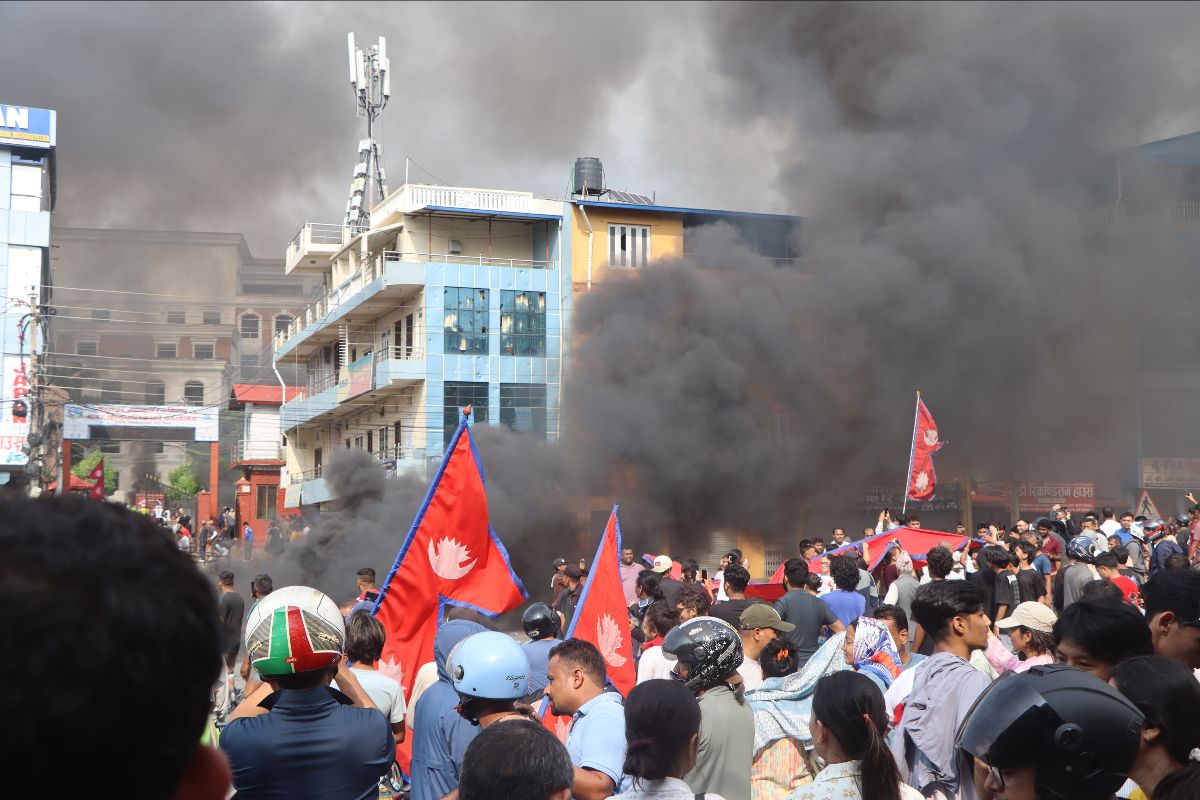
A week of protests in early September left 76 people dead and over 2,000 hurt, and were more than enough to topple the government and set the table for new elections in March.
Enter Shah.
The erstwhile mayor of Kathmandu, a civil engineer by day, swept into power with a surprising 2022 victory on an anti-corruption platform and the strength of his celebrity from his rap career. Shah’s three-plus years in office were marked by cleanup efforts that included the demolition of illegal structures and a crackdown on unlicensed businesses and an initiative to widen city roads, but his commitment to transparency stood in stark contrast to his unwillingness to speak with local media. However, his penchant for the social media apps his predecessors sought to curtail proved to be an effective way to reach voters.
Despite a clear path to parliament from the capital, Shah opted to challenge ousted Prime Minister K.P. Sharma Oli in a constituency more than 200 miles away. That move paid off handily, with Shah taking two-thirds of the vote in what was once an Oli stronghold.
As he cruised to victory in the Jhapa District, Shah’s Rastriya Swantantra Party romped nationwide, buoyed by nearly 1 million new registered voters since the country’s last parliamentary elections in 2022. The electoral system, which uses both first-past-the-post and proportional representation, is meant to prevent any one party from dominating, but the RSP ultimately took more than 180 of the 275 seats in the lower house. It paired Shah’s star power with pledges to create 1.2 million new jobs and raise per capita income to reduce forced migration, along with universal health care within five years. Shah’s also called for investigations into government corruption dating back to the 1990s, and into the response to last September’s protests.
“There’s just a lot of room for unrest, unresolved tension in Nepal in general, aside from the big generational shift we saw last year.”
Even with an apparent mandate from voters, change may not come easy.
“Nepal in particular has a very entrenched bureaucracy that’s been obviously accused of corruption,” Wang said. “It’s slow moving, it’s labyrinthine. So implementing that very ambitious agenda is almost certain to run into roadblocks in that realm.”
Shah himself showed little hesitancy to clash with the federal government from the mayor’s office, at one point halting trash collection from the main administrative center over failures to address the city’s chronic waste management crisis. Now he’ll be the one tasked with shaping the future for a country that could be at a generational turning point.
A day after Shah took office, former PM Oli and ex-interior minister Ramesh Lekhak were arrested as part of an ongoing investigation into their handling of last year’s protests, over allegations the government was negligent in preventing the deaths of demonstrators.
Those arrests may be an early sign of government action, but how much patience will the public have if change is slow to take?
“There’s just a lot of room for unrest, unresolved tension in Nepal in general, aside from the big generational shift we saw last year,” Wang said.
Written by Joe Veyera. Edited by Jillian Stampher.
Further reading:
- Review Factal’s coverage of last September’s student uprising and March’s general election on our topic pages (members link)
- Watch this brief BBC News profile of Balen Shah

Thanks for reading! If you enjoyed this edition, sign up here to receive The Debrief in your inbox on the first of every month.
Top photo: Balendra Shah (center) at a 2022 event in Kathmandu, Nepal (Photo: Janak Bhatta / Wikimedia Commons / CC SA 4.0)
Verified risk intelligence by Factal supports the world’s largest corporations and 300+ humanitarian aid NGOs, helping them act faster in a world of rumors and generative misinformation. Facts save lives.
Try Factal for free or talk with our sales team (sales@factal.com) for a demo.