
 Dave Clark
Two students on a street in El Salvador when a landslide occurs nearby. Dozens of faculty and students in Eindhoven, Netherlands just blocks from a police operation. A group studying ancient Andean cultures when regional conflict suddenly escalates. A university sports team grounded by extreme weather.
These fast-moving risks are not hypothetical scenarios. They’re a part of the daily reality managed by the Brigham Young University Global Security Team. Charged with protecting thousands of faculty, students and staff traveling worldwide, the team operates in a constant state of vigilance, monitoring events that can shift from routine to critical in minutes.
For BYU’s global security managers and analysts, success is often invisible. It’s the travel alert that doesn’t need to be sent. It’s the reassurance that students were never exposed to a threat unfolding just miles away. But when incidents do occur near BYU travelers, the team is ready to respond immediately.
When that landslide happened in El Salvador, an alert came across the desktop of Benjamin Cluff, Global Security Advisor at Brigham Young University. He knew students were in the vicinity. Because the information came through quickly with verification, he was able to notify the group of students within minutes, giving them the information to make informed decisions about their travel. This incident passed without harm, but it’s a reminder of the coordination and awareness required to keep the university’s community, at home and abroad, safe every day.
Brigham Young’s Global Security team oversees one of the five largest study-abroad programs in the United States, along with athletics programs, performing arts, faculty and senior leadership travel. Each year, they monitor nearly 10,000 trips. Yet the entire operation consists only of two full-time and two part-time staff members supported by a rotating group of student assistants. Despite the lean structure, the team consistently delivers quick and reliable support to thousands of travelers.
Landes Holbrook, Senior Manager for Global Security, Health and Safety, saw the need for an intelligence platform that student assistants could adopt quickly – one that still delivered detailed, actionable risk intelligence without overwhelming the team with noise. They needed speed, clarity and simplicity. A few years ago, Holbrook and Cluff selected Factal to help meet that challenge.
“Of all the platforms we use, I think it’s [Factal] that is most quickly adopted and understood by them,” Cluff says about the student assistants on the team. “They all picked it up quite fast, within a week.”
“It’s really friendly for academia,” Holbrook adds.
Both Benjamin and Landes said student assistants deepen their understanding of geography, geopolitics and global threats during their time on the Global Security team. Even staff outside the classroom, including the safety and security team, frame their work around students’ education and development. At BYU, every interaction is an opportunity to learn.
Security student assistants build practical knowledge about global natural hazards, geopolitics, localized crime trends and even the risks associated with unruly sports fans when classmates travel to places like Eindhoven. This hands-on exposure is part of what makes the program unique; it blends real-world operational support with educational growth.
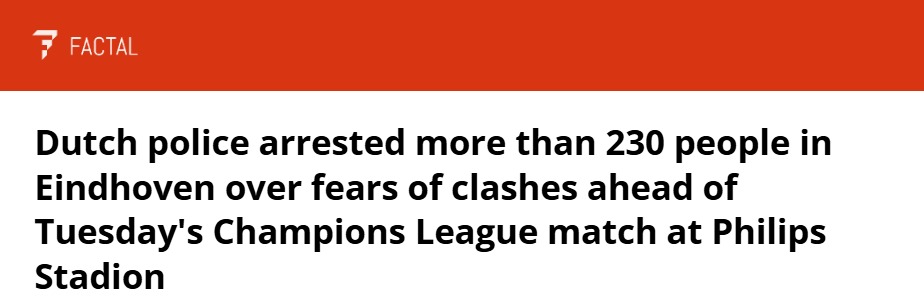
Similar to their counterparts in corporate security, the BYU team depends on both speed and depth of knowledge. Although BYU is an academic institution, its security tempo often mirrors that of a global enterprise. Since switching from their previous provider to Factal, they have spent less time navigating a platform and more time supporting travelers and mentoring student assistants.
“I feel like I was spending so much time in that app, ten times the amount of time probably that I do in Factal, to get the same information, the same outcome,” Cluff explains.
Holbrook relies on Factal not only for alerts but for broader situational awareness. Monitoring general news where students and faculty are traveling is part of his daily rhythm. Factal helps him quickly distinguish which updates require action and which simply help to a clearer understanding of the environment.
“Factal’s made a huge difference in being able to do that, to be able to view news, but also to be able to set those parameters of what you want to receive or just want to look at, based on what you perceive as areas of of risk and where you might have personnel – that’s been super helpful and, and easy to use.”
Factal’s editor’s notes are particularly valuable to the BYU team.
“They’re super proactive,” Holbrook says. “If something happens, say it’s a breaking news item, they’ll post a comment that says, ‘This is what we just received. It’s unconfirmed, and we’re on top of it.’ They’re making you aware and letting you know that they’re watching it closely. They’re confirming the reports that are coming in.”
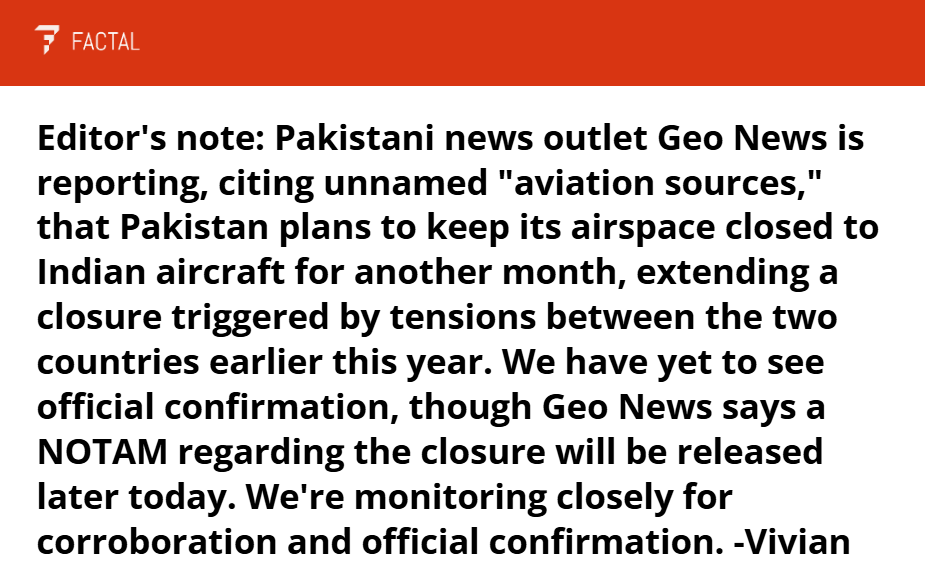
During a recent escalation between Pakistan and India, an editor’s note provided early context that helped the team assess uncertainty and confirm that students were safe, allowing them to act only when necessary. That clarity is critical when managing thousands of travelers at once.
India-Pakistan tensions over Pahalgam attack (for Factal Members)
Holbrook and Cluff also use the Factal chat feature to communicate directly with experienced editors, leaving tips or asking for clarification. That real-time collaboration increases the effective size of the BYU team. Rather than relying solely on two full staff members and a handful part-time and student assistants, they know Factal editors are on duty to help them 24/7.
“It truly is like having a friend, you know, talking to you. The comfort level that we feel on this end is high,” Cluff says. “I like that it’s a dialogue. I love that we can ask them questions there in the chat or share information we’re seeing or hearing from our people on the ground. And if it’s helpful to them [the editors], they could incorporate it [in an update.]”
Security work inevitably involves constant exposure to difficult news. It’s the nature of the business – but sometimes the updates are positive. Holbrook said he recently notified a group in Ecuador that a national strike was de-escalating.
As tension eased, the student group could refocus fully on their studies and projects, while the security team redirected attention to travelers facing higher risk.
“We’re saving hours and hours of work every week, every day, by using your product.”
Every day the team provides guidance to travelers using Factal and other tools, whether that means avoiding a landslide, managing a medical concern or confirming a safe return home. Their work may be mostly visible during emergencies, but their greatest success often goes unnoticed: quiet days and uneventful hours when nothing goes wrong because the right information arrived just in time.
Top photo: BYU at sunset (Photo by jpstanley / Flickr / CC BY 2.0)
What is Factal?
Trusted by many of the world’s largest companies and more than 300 humanitarian NGOs, Factal is verified risk intelligence and collaboration that brings clarity to an increasingly noisy and uncertain world.
Powered by a hybrid of advanced AI and experienced journalists, Factal detects early signals, verifies critical details and assesses the potential impact at the speed of social media. From physical incidents to geopolitical developments, Factal offers the most trusted, real-time risk intelligence on the market.
Factal is also home to the largest security and safety collaboration network in the private sector. Members securely share information with other members in proximity to the same incident, both on Factal.com and the Factal app.
Learn more at Factal.com.