
 Factal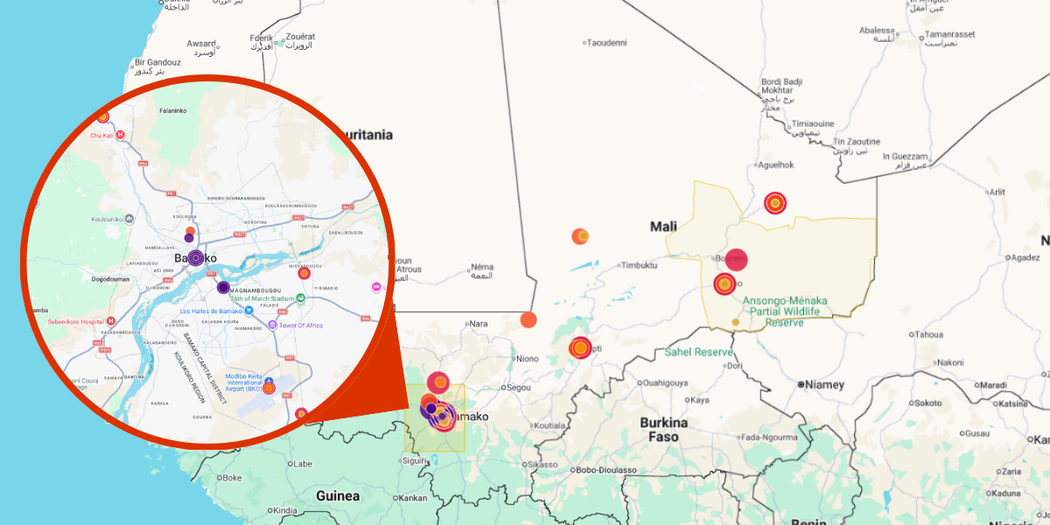
Welcome to Factal Forecast, a look at the week’s biggest stories from the editors at Factal.
We publish our forward-looking note each Thursday to help you get a jump-start on the week ahead.
Week of May 1-8
A Look Ahead
May 1 | U.K. royals visit Bermuda
King Charles III and Queen Camilla will arrive in Bermuda for a two-day tour on Friday following their state visit to the United States.
What’s happened so far
The visit will mark King Charles’ first visit to a U.K. overseas territory since assuming the throne in September of 2022, to “strengthen the U.K.’s modern partnership with Bermuda.” Bermuda is a self-governing British overseas territory and, as such, has its own House of Assembly and Senate and is led by U.K.-appointed Governor Andrew Murdoch.
The impact
The monarch’s visit will be aimed at accentuating ties in the region at a time when transatlantic relations have been put under strain by the U.S.’s war in Iran. In recent months, President Donald Trump has repeatedly criticized the U.K. government for not being supportive enough of the U.S.-Israeli campaign in Iran. The United Kingdom is currently pushing for greater alignment on a number of issues with Bermuda, including the application of sanctions on Russian assets. A recent Transparency International report found that companies registered in the U.K. Overseas Territories remain a key conduit for Russian trade, totalling at least $8 billion USD between February 2022 and January 2025.
May 1 | Russia to block Kazakh oil flows to Germany via key pipeline
Russia will block oil from Kazakhstan heading to Germany starting Friday.
What’s happened so far
Kazakh oil exports to Germany via the northern branch of the Druzhba pipeline network through Russia will be halted from May 1, Russian authorities said, providing no explanation beyond invoking “technical possibilities.” The cessation of flows to Germany through the pipeline’s northern branch follows a prolonged halt to operations through the southern branches via Ukraine to Hungary and Slovakia after a Russian drone strike damaged the pipeline in January, triggering a political crisis surrounding the blame for the halt of supplies to those nations.
The impact
The halt of Kazakh oil deliveries introduces further turmoil into German energy markets already roiling from supply shocks caused by the war with Iran. Of particular concern will be flows to Berlin as Kazakh oil deliveries account for nearly 20 percent of supplies for the major PCK Schwedt refinery, which produces the vast majority of fuel for Berlin and the Brandenburg region. While Germany has undertaken significant measures to end its reliance on Russian energy exports since 2022, the Druzhba pipeline represents a vestige of leverage for Moscow vis-a-vis Berlin. The decision to squeeze German supplies in tandem with the Gulf supply shocks could be calculated to bolster support for the pro-Russian AfD ahead of regional elections later this year while also attempting to nudge Germany into reliance on energy exports from Russia’s major Gulf of Finland nodes which have increasingly been targeted by Ukraine to devastating effect.
May 1 | South Korean Navy to launch nuclear-powered submarines
South Korea’s defense ministry approved plans to establish a nuclear-powered submarine fleet, with first steps taking place Friday.
What’s happened so far
U.S. President Trump indicated in October 2025 that Washington approved plans to work with South Korea to build nuclear-powered submarines. The South Korean Navy said it would form a nuclear-powered submarine procurement group, consisting of a general officer and 30 personnel, starting May 1. The Navy said this group will train personnel, develop education programs and define safety guidelines over the medium to long term.
The impact
South Korea’s pursuit of nuclear-powered submarines could help bolster its defense capabilities in light of closer ties developing between Russia and North Korea. Plans for technology sharing may also strengthen trade and military cooperation between South Korea and the United States and serve as a deterrent to Pyongyang who continue to bolster their nuclear missile arsenal.
May 1 | UAE leaves OPEC
The United Arab Emirates said it will leave the OPEC oil cartel and its wider OPEC+ group Friday, effectively ending its relationship with the group it joined in 1967.
What’s happened so far
OPEC, the Organization of the Petroleum Exporting Countries, is a group of nations which coordinates on the production of oil, aiming to unify policy and keep prices stable for producing nations while balancing responses to global needs. It is responsible for some 40 percent of the world’s production. Oil prices have remained high since the U.S.-Israeli strikes on Iran led to the dual blows of Iranian retaliatory attacks on energy infrastructure and closure of the Strait of Hormuz, taking millions of barrels per day capacity offline. Gas prices in the United States have surged to record highs.
The impact
The UAE is the third-largest producer, inside the cartel, behind Saudi Arabia and Iran, and its exit could significantly weaken OPEC’s power. The move is likely to further chill already cool relations with neighbor Saudi Arabia, which remains the group’s largest producer. While there’s no immediate impact likely on prices, the move would allow the UAE to pump more oil at a time of high demand and high prices, as it deals with an expensive repair bill from Iran’s strikes.
May 4 | EPC and Armenia-EU summits in Yerevan
The eighth summit of the European Political Community will be hosted in Yerevan next Monday, at the same time the first ever Armenia-European Union summit will be held in the country's capital.
What's happened so far
Armenia has been balancing an increasingly precarious position between its long relationship with ally and sponsor Russia, and recent aspirations to forge closer ties with the EU and the United States. Russian President Vladimir Putin warned Armenia earlier this month that it would not be able to be part of both the Russia-led Eurasian Economic Union and the EU, though Armenia’s prospects for EU membership look distant. Yerevan froze its participation in the Russian-led Collective Security Treaty Organisation in 2024, and Prime Minister Nikol Pashinyan recently said their membership itself is now also uncertain.
The impact
Armenia will be restricting vehicle traffic in Yerevan from May 3 to 5, as well as closing airspace to drone activity and private flights as a security measure. On the agenda are strengthening bilateral relations between Armenia and the EU in the areas of connectivity, economic and energy security, and democracy.
May 7 | Local elections in the U.K.
Voters in England, Scotland and Wales will vote Thursday in a closely-watched test of popularity for Prime Minister Keir Starmer’s Labour Party.
What's happened so far
In England, almost 5,000 council seats will be up for grabs in local authority elections with six areas directly electing mayors. Nigel Farage’s far-right Reform Party is hoping to cut into Labour heartlands and build momentum ahead of the next general election. In Scotland, voters will choose the make-up of the Scottish Parliament, with polls consistently showing the pro-independence SNP as the largest party, with questions over whether they will win a majority. In Wales, polls show Labour, dominant for a century, behind pro-independence party Plaid Cymru and behind Reform for a third place, or worse, finish. In both Wales and Scotland, Labour are hoping to beat expectations and come in second, forcing potential coalition negotiations. On the left, the Greens are hoping to add seats as well.
The impact
With the next U.K. general election scheduled for 2029 or earlier, this combination of elections will likely be treated as a mid-term report card for the Labour government. A bruising defeat in English local elections as well as third or worse place finishes for Labour in Scotland and Wales could endanger the position of Prime Minister Keir Starmer, with leadership contenders said to be waiting in the wings for an opportune moment.
May 8 | Victory in Europe Day
Countries across Europe as well as the United States will mark the 81st anniversary of the Allied victory in World War II with parades and historical displays on Friday.
What's happened so far
Every year, countries such as the U.K. and France hold commemorations to mark the acceptance by the Allied of the WWII of Nazi Germany’s surrender of its armed forces in 1945. The day pays homage to the fallen soldiers, veterans and former prisoners of war, and in some countries such as in France, the day is a national holiday.
The impact
VE Day is celebrated on May 9 by some countries, including in Russia, where a large military parade often takes place. On the same day, Europe Day day is celebrated, which marks the signing of the Schuman Declaration. The European Union is this year making 40 years since its first official celebrations and public use of the EU flag and anthem, as well as the joining of Portugal and Spain of the union. Together with the VE Day celebrations in Brussels, EU institutions will be open to the public. These events are likely to bring some disruption and lead to increased security.
May 8 | 48th ASEAN Leaders’ Summit
Diplomats from 11 countries in the Association of Southeast Asian Nations will meet in the Philippines' Cebu on Friday and Saturday.
What's happened so far
In the wake of the conflict in the Middle East, hundreds of preparatory meetings have been moved online to cut costs. Philippine President Ferdinand Marcos Jr. said that the upcoming two-day summit will focus on addressing issues such as fuel supply, food prices and migrant workers. Aside from the impact of the war, the meetings are also expected to address the Myanmar situation and implementation of the Five-Point Consensus the regional bloc put forward in 2021. Regional officials have also said they are hoping to make progress on the negotiation on the Code of Conduct in the South China Sea. While not a member of ASEAN, China is participating as a dialogue partner.
The impact
Earlier in April, Myanmar’s president and former junta leader reduced the sentence of the jailed ex-leader Aung San Suu Kyi, as well as approving amnesty for more than 4,300 prisoners, to mark the Myanmar New Year. ASEAN has welcomed the decision, calling it “a positive step towards inclusive national dialogue” and encouraging more prisoner releases. Analysts will definitely be looking at whether the upcoming summit could bring about further progress as Myanmar’s new government looks to reconcile its relationship with the regional bloc. On the topic of the South China Sea, some are skeptical that any meaningful difference could be made in this year’s summit, as past resolutions were seen as ineffective due to lack of authority and enforcement.
What Else Matters
Mali rebel offensive
A series of coordinated attacks across Mali over the weekend have highlighted vulnerabilities of the violence-marred country under military rule. Following independence from France in 1960, the West African nation has faced political and economic instability, as well as armed violence by rebel groups. After the withdrawal of French troops in 2021, Russian paramilitary groups Wagner and subsequently Africa Corps have grown to be more and more influential and central to the government’s fight against armed groups. In the early hours of April 25, multiple strategic towns and areas, including the capital Bamako, were targeted by Tuareg rebels of the Azawad Liberation Front (FLA) coalition and the jihadist Group for the Support of Islam and Muslims (JNIM). Mali’s junta government later confirmed the death of its defense minister, who was killed in a car bomb attack in Kati on Saturday. On Sunday, the FLA took control of Kidal, the group’s former stronghold in the north. Russia’s defense ministry confirmed that the mercenary group Africa Corps has since left Kidal but will continue to fight in alliance with the Malian army. In a video address on Tuesday, three days after the initial attacks, Mali’s junta leader Assimi Goïta said the situation was “under control” and vowed to continue fighting the insurgency.
Watch for: While the Malian government claims to have the situation under control, intermittent fighting has continued to be reported in several areas of the country, including the capital Bamako and the central Timbuktu region. In a statement Wednesday, the FLA said its forces plan to “liberate” Gao, Timbuktu and Menaka next. With roads blockaded and curfew in place in several major cities, the already dire fuel and supply shortages have been exacerbated. Analysts have also warned of the spread of the conflict amid the growing influence of jihadist group JNIM in the central Sahel.
Listen to the Forecast Podcast
Editors Jimmy Lovaas and Owen Bonertz discuss the recent coordinated attacks across Mali by al-Qaida-linked militants and separatists, plus more on the UAE's exit from OPEC, South Korea’s plan for nuclear-powered submarines, local elections in the U.K., and the Association of Southeast Asian Nations Leaders’ Summit in the Philippines.
Subscribe to the show: Apple Podcasts, Spotify, and many more.
This episode includes work from Factal editors Owen Bonertz, David Wyllie, Michael Archer, and Hua Hsieh. Produced and edited by Jimmy Lovaas. Music courtesy of Andrew Gospe.
Colombia violence ahead of election
Colombia will hold presidential elections on May 31, which follows a contested legislative vote in March that saw the fragmentation of Congress. In the weeks before the election, Colombia has seen an uptick in violence. Last weekend, a series of attacks took place in the Valle de Cauca area, with at least 20 people killed in an explosion during a FARC dissident blockade in the town of Cajibio. The dissidents later acknowledged responsibility for the blast, saying the attack was a "mistake."
Watch for: There are five major candidates in the race for president, with the front-runner Ivan Capeda being the only one advocating for peace talks to end violence. The other candidates favor a more combative approach, with ring-wing Abelardo de la Espriella pledging to build megaprisons across the country and to end peace talks with the dissident groups. It is yet unclear what approach voters are going to go with, and no contestant is expected to secure enough votes to win with a majority this month. A second round of voting will likely take place in June. In the meantime, violence could continue as the race heats up and as the political landscape presents itself so polarized.
Extended Outlook
What's on our radar in the coming weeks...
May 1-8
May 1
- International Workers' Day
- "May Day" general strike
- South Korea Navy to launch task force for nuclear-powered submarine workforce, training
- UAE leaves OPEC
- U.K.'s King Charles III and Queen Camilla begin two-day visit to Bermuda
- Russia to block Kazakh oil flows to Germany via key pipeline
May 3
- Friendship Day air show
May 4
- EPC Summit in Yerevan, Armenia
May 5
- Netherlands Liberation Day
May 7
- U.K. local elections
May 8
- 48th ASEAN Leaders' Summit
- Costa Rican President-elect Laura Fernández's inauguration ceremony
- Victory in Europe Day
- IMF meeting on Pakistan
May 9-15
May 9
- Asian Cup draw
May 10
- Lebanon elections
May 12
- Eurovision in Vienna
- Belgium national strike
- Bahamas elections
May 13
- U.K. King's Speech
May 14
- Trump visits China
May 16-22
May 17
- Andalusia regional election
- Cape Verde elections
- Prayer event at U.S. National Mall
May 18
- French Open begins
May 19
- Taiwan Legislative Yuan to vote on impeachment against President Lai
May 20
- South Korea's Samsung Electronics workers planned strike
May 23-29
May 24
- Cyprus parliamentary election
May 25
- Africa Day
Thanks for reading! If this was forwarded to you, you can sign up for free.
Top Photo: Factal incident map of Mali during the April 2026 attack.
Verified risk intelligence by Factal supports the world’s largest corporations and 300+ humanitarian aid NGOs, helping them act faster in a world of rumors and generative misinformation. Facts save lives.
Try Factal for free or talk with our sales team (sales@factal.com) for a demo.