
 Factal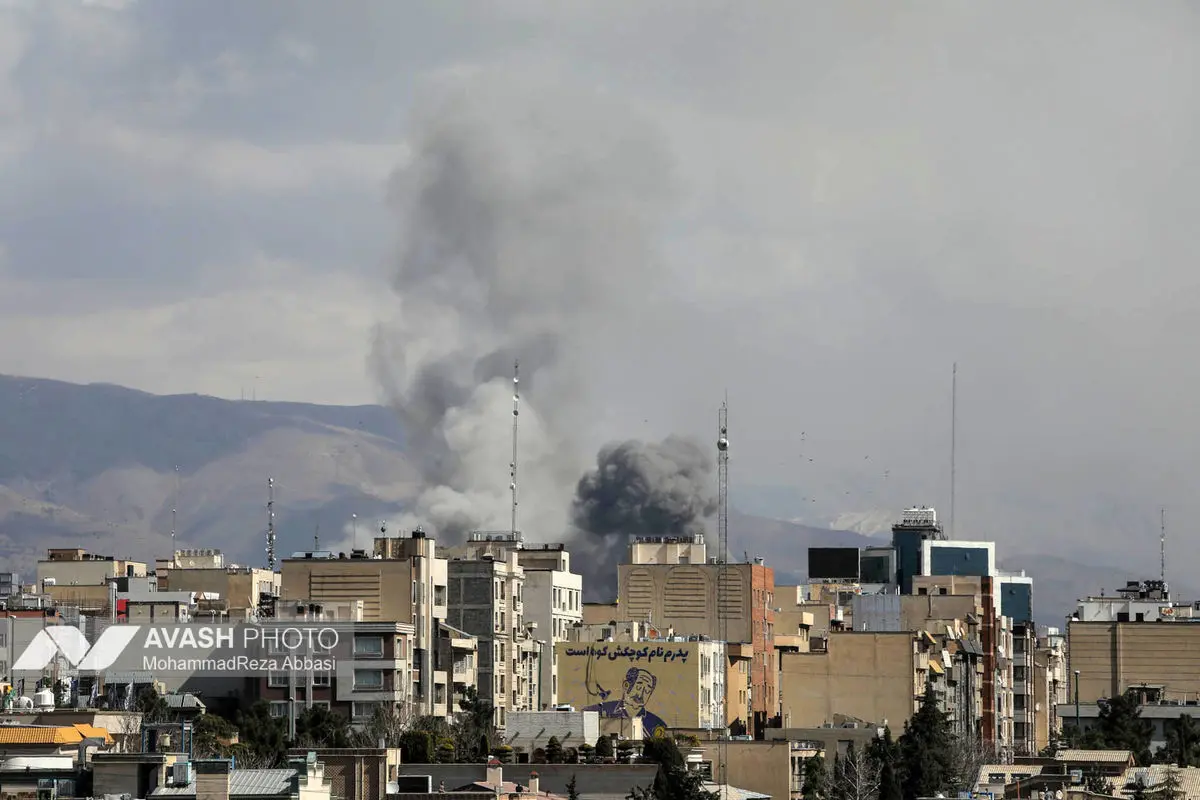
As a partial shutdown of the U.S. Department of Homeland Security nears its sixth week, travelers are increasingly feeling the effects. In this week’s Factal Forecast podcast, Senior Editors Jimmy Lovaas and Joe Veyera discuss the growing problems of long delays at airport checkpoints, TSA staff working without pay, and dragging negotiations to end the shutdown.
Listen now or download on your favorite platform.
Week of March 20-27
Welcome to Factal Forecast, a look at the week’s biggest stories from the editors at Factal.
We publish our forward-looking note each Thursday to help you get a jump-start on the week ahead.
A Look Ahead
March 20 | Eid al-Fitr amid war
Muslims across most of the Middle East will celebrate their biggest holiday marking the end of Ramadan on Friday with restrictions due to the escalating war between the United States-Israel alliance and Iran. Iran will mark the holiday on Saturday as its military and civilian death tolls mount.
What’s happened so far
The war is approaching the three-week mark with devastating attacks on high-profile energy infrastructure in Iran and Persian Gulf nations, continued Israeli-U.S. assassinations of Iranian leaders and vows from all sides to retaliate more forcefully. Expansion of hostilities is also seen in Iraq, where oil facilities and U.S. assets are under daily assault. Iran cut off vital natural-gas supplies to Iraq after its South Pars gas field was struck on Wednesday. Even countries not directly involved in the conflict, like Egypt, are starting to restrict electricity consumption due to the energy shortage and price shock.
The impact
Arab Gulf countries are limiting the traditional morning outdoor prayers involving tens of thousands of people at some locations to mosques and other indoor facilities due to daily Iranian attacks. Other restrictions include bans on playing with fireworks and drones, in addition to war-related prohibitions on photography that may be deemed counter to national security and have landed hundreds of people in jail. In Israel, authorities continue to restrict Palestinians’ access to Al-Aqsa Mosque in East Jerusalem. Iranian missiles targeting Israel are causing more widespread damage and disruption, including in Tel Aviv, due to the apparent use of larger cluster munitions.
March 22 | Italian referendum on judicial reform
On Sunday, Italians will vote on whether to overhaul their judicial system in a referendum that is widely seen as a test of public support for Prime Minister Giorgia Meloni’s government.
What’s happened so far
The proposed changes to the judiciary system would separate the careers of judges and public prosecutors. Under the current system both roles share a single entry exam and professionals may switch roles early on in their careers. If the referendum passes, the reform will separate the career paths and restructure judicial oversight bodies. Proponents of the reform say it has been a long time coming and will modernize Italy’s judicial system, bringing it in line with other European countries. Critics, however, have argued the reform will undermine judicial independence and potentially increase political control over prosecutors.
The impact
The poll has widely been perceived as a litmus test for the government led by Meloni ahead of next year’s parliamentary elections. A loss would represent the first major setback to her premiership. Current polling shows both camps neck-and-neck, signaling turnout will be a crucial factor in the vote.
March 22 | Slovenia election
Slovenians will choose a new parliament in elections held on Sunday.
What’s happened so far
Since the last election cycle in 2022, a coalition composed of the Freedom Movement party, Social Democrats and the Left has governed the country. The current government has faced several scandals in the subsequent years, including accusations leveled against Prime Minister Robert Golob of unlawful pressure on the interior ministry and corruption. The Slovenian parliament also passed a controversial bill granting expanded policing powers viewed by human rights organizations as targeting the Roma community.
The impact
The right-wing Slovenian Democratic Party has surged in popularity since 2024. Led by Janez Jansa, the party has aligned itself with figures such as Viktor Orbán in Hungary, but has long been a staunch supporter of Ukraine. Several Slovenian investigative journalists have also published a report linking recent scandals to former Israeli intelligence officers who allegedly met with Jansa in late 2025. The election will determine the composition of Slovenia’s 90-seat National Assembly and the future political direction of the country.
March 22 | North Korea holds first session of new Supreme People’s Assembly
North Korea’s newly-elected parliament will convene on Sunday, with new state leadership, a possible constitutional revision and a new five-year national policy plan on the agenda.
What's happened so far
North Korea held elections last Sunday to choose members of its rubber stamp legislature, the first in seven years, with voter turnout recorded at 99.99 percent. The assembly is technically the highest state power in the country, but it serves largely as a body for formal approval of decisions made by the ruling Workers’ Party, of which Kim Jong Un was re-elected leader in February.
The impact
While the assembly itself holds little power, the decisions finalized at the latest session will provide insight on the direction North Korea envisions over the next five years. Analysts are watching for a potential constitutional amendment after the ruling Workers’ Party rewrote their charter to enshrine a “two hostile states” framework regarding its relationship with South Korea, and the implementation of Kim Jong Un’s promise to expand the country’s nuclear arsenal.
March 24 | Danish election
Denmark will hold its general elections on Tuesday following a call for early polls.
What's happened so far
Denmark’s Prime Minister Mette Frederiksen called early snap elections last month, more than a half-year before she was due to call general elections for parliament. The entire composition of Denmark’s parliament will be voted upon, including the two seats allotted respectively to Greenland and the Faroe Islands, Denmark’s two constituent territories.
The impact
Frederiksen’s decision to trigger early elections is in part related to her surging popularity among Danes coinciding with her hardline posture amid U.S. President Donald Trump’s persistent threats to violate Danish sovereignty and forcefully annex Greenland. In her speech announcing the early vote, Frederiksen emphasized the need for Denmark and Europe to continue to stand together against security threats, whether from Russia or the United States, signalling the issue would continue to be on the forefront of electoral topics. Frederiksen and her Social Democrats’ main rival will be Defense Minister Troels Lund Poulsen of the center-right Venstre, though experts assess the Social Democrats will perform well and prolong Frederiksen’s rule as prime minister, which dates back to 2019.
March 26 | FIFA qualifiers in Mexico
Six teams are set to face off in Mexico next Thursday to determine who will take two of the six spots remaining for the 2026 World Cup.
What's happened so far
The FIFA Play-Off Tournament will begin March 26, with four teams squaring off at stadiums in Guadalajara and Monterrey before finals slated for March 31. New Caledonia is set to take on Jamaica at Guadalajara Stadium next Thursday, while Bolivia will face Suriname at Monterrey Stadium. The winners will go on to play the DR Congo team in Guadalajara or the Iraqi side in Monterrey. The teams that come out victorious in those matches will go on to join this summer’s competition.
The impact
The World Cup kicks off June 11, when Mexico and South Africa compete in Mexico City. In an analysis released last year, FIFA estimated that the event could generate more than $80 billion in global gross output, including $30.5 billion in the United States. However, potential impacts remain uncertain in the months leading up to the tournament as the country grapples with an international tourism slump that began last year. Analysts believe the games will have a limited impact on Mexico’s economy, while Canadian officials estimated that matches would generate over $2 billion in economic activity across the country.
What Else Matters
DHS shutdown
TSA agents missed their first full paycheck last Friday, with a growing number of workers either calling in sick or quitting entirely as the partial government shutdown impacting the Department of Homeland Security enters its second month. As delays grow at airport checkpoints, the White House has reportedly offered narrow concessions in search of a deal, but the two sides don't appear close to an agreement. Democrats have sought significant changes to federal immigration enforcement operations in exchange for their votes on a funding bill, including a ban on officers entering private property without a judicial warrant and a uniform code of conduct.
Watch for: Some lawmakers have expressed hope that President Donald Trump's decision to replace Secretary Kristi Noem with Oklahoma Sen. Markwayne Mullin — pending Senate confirmation — will help end the impasse. In the meantime, the latest proposal from the White House reportedly includes an increase in body camera funding and a commitment to limit "civil immigration enforcement activities" at "certain sensitive locations," like hospitals and schools. If no deal is reached, and the number of TSA workers calling out continues to rise, smaller airports may be forced to close, Trump administration officials have warned.
Forecast podcast: Travelers and TSA workers feel the pain as DHS shutdown drags on
Editors Jimmy Lovaas and Joe Veyera discuss the ongoing DHS shutdown, plus more on Eid al-Fitr coming amid war in the Middle East, elections in Slovenia and Denmark, and FIFA qualifiers in Mexico.
Subscribe to the show: Apple Podcasts, Spotify, and many more.
This episode includes work from Factal editors Joe Veyera, Ahmed Namatalla, Michael Archer, Alex Moore, and Theresa Seiger. Produced and edited by Jimmy Lovaas. Music courtesy of Andrew Gospe.
Kabul strikes
The Afghan Taliban government said a Pakistani airstrike struck a large rehabilitation center in Kabul on Monday night, killing more than 400 people and injuring some 250 others, in what was the deadliest incident since Pakistan declared an “open war” on Afghanistan in late February. Pakistani officials rejected the claim, saying its forces conducted precise strikes, including the one in Kabul, against militant infrastructure and not civilian facilities. While independent verification of the toll remains largely limited, the New York Times reported that at least 75 bodies had been carried out from the site of the strike, with an assessment from the UN suggesting that the toll could be much higher. Reuters, citing local residents and its own journalist, reported that the site used to be a NATO military base but had been converted to a drug treatment center about a decade ago, known colloquially as Omid Camp. The Taliban said the treatment center had a capacity for some 2,000 patients.
Watch for: The strikes came amid a sharp escalation in the conflict between the two countries, evolving from border skirmishes into broader air and ground operations after Pakistan carried out airstrikes in Nangarhar in late February. The Afghan Taliban retaliated with drones that reached as far as Islamabad, injuring four people in various cities last Friday. Pakistan, which armed the Taliban in the 1990s to help counter Indian influence and establish a pro-Pakistani administration, has accused Afghanistan of providing safe havens to militants launching attacks on Pakistan. The Afghan Taliban have repeatedly denied the allegation, calling militancy an internal Pakistani problem. Multiple international countries have tried to mediate the conflict, with efforts by Qatar, Turkey and Saudi Arabia failing to bring a lasting ceasefire. Most recently, China has urged for restraint, calling for the safety of Chinese personnel in the region. While it seems unlikely that Afghanistan, which relies on weapons left behind by the United States following the 2021 pullout from Kabul, can sustain a long-term conflict with Pakistan, Taliban officials have vowed continued retaliation to Pakistani strikes.
Ecuador-Colombia border tensions
Colombian President Gustavo Petro said on Tuesday that 27 bodies were found in its territory after bombings along the border with Ecuador, which he claimed were not carried out by Colombia's armed forces. On Monday, Petro had claimed during a televised Cabinet meeting that the country was “being bombed from Ecuador, and it's not rebel groups who are doing it,” and asked U.S. President Donald Trump to call Ecuador’s counterpart Daniel Noboa asking him to stop the operations. Meanwhile, the Ecuadorian government denied any responsibility, saying its security forces were carrying out operations but strictly within national borders.
Watch for: The latest incident comes as tensions continue to escalate between the two countries. Earlier this year, Noboa imposed a 30 percent tax on Colombian imports, claiming the neighboring country was not doing enough to tackle drug trafficking. This month, Ecuador and the United States carried out joint operations inside Ecuador to fight narco-traffic and have since signed an agreement to open a Federal Bureau of Investigation office in Ecuador. Colombia, which will hold presidential elections in May and which has tried to reach peace agreements with rebel groups during Petro’s tenure, was recently left out of the "Shield of the Americas," a coalition of 17 countries set up by Trump to combat drug trafficking in the region.
Extended Outlook
What's on our radar in the coming weeks…
March 20-27
March 20
- Eid al-Fitr
March 21
- South Australia election
March 22
- Round 2 of France municipal elections
- Slovenia parliamentary election
- Germany's Rhineland-Palatinate holds state election
- Italian judicial reform referendum
- North Korea holds first session of new Supreme People’s Assembly
March 23
- FIFA final World Cup qualifiers in Monterrey and Guadalajara, Mexico
March 24
- Danish general election
March 25
- MLB Opening Night
March 26
- 14th WTO Ministerial Conference
March 28-April 3
April 1
- India begins first phase of 2027 Census
April 2
- Passover
April 4-10
April 4
- Maldives election and referendum
April 6
- The Masters tournament in Augusta, Ga.
- March Madness championship game
April 10
- Djibouti election
April 11-17
April 12
- Hungary parliamentary election
- Peru general elections
- Paris marathon
- Benin presidential election
- Easter
April 13
- IMF & World Bank Spring Meetings in Washington, D.C.
- Pope Leo visits Africa
Top photo: Smoke is seen rising from a reported airstrike in Tehran, Iran, on March 4. (Photo: Avash Media / CC BY 4.0)
Thanks for reading! If you'd like the Factal Forecast in your inbox, you can sign up for free.
Verified risk intelligence by Factal supports the world’s largest corporations and 300+ humanitarian aid NGOs, helping them act faster in a world of rumors and generative misinformation. Facts save lives.
Try Factal for free or talk with our sales team (sales@factal.com) for a demo.