
 Factal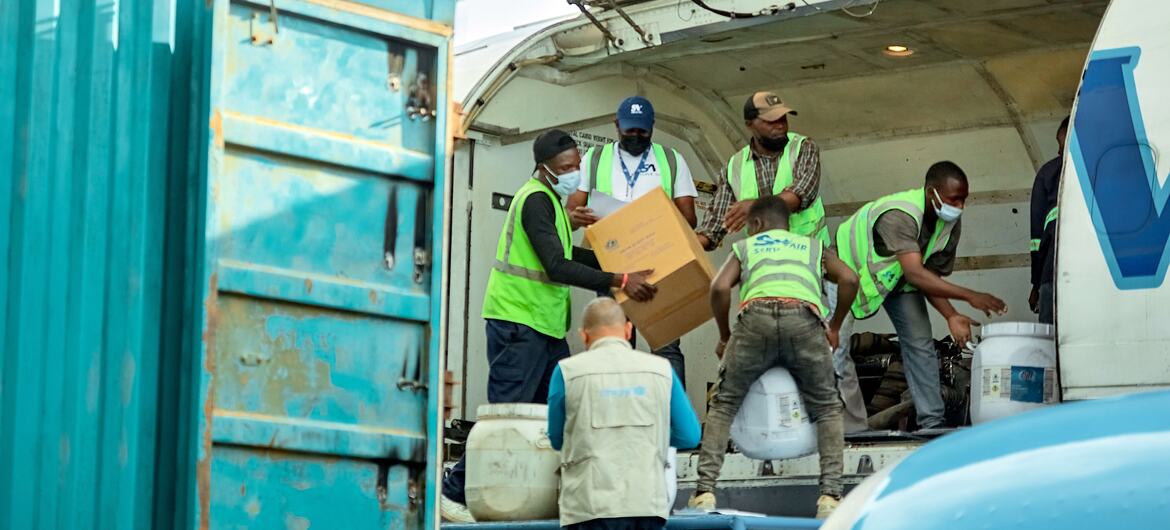
One year after the official closure of the U.S. Agency for International Development, the funding picture for public health interventions around the world remains murky.
To casual onlookers, it had the makings of a global health nightmare.
Cruise ship passengers fanning out across the globe without the knowledge they had been exposed to a rare but severe virus that boasts a fatality rate of nearly 40 percent.
The hantavirus outbreak on the MV Hondius earlier this year resulted in only three deaths , and admittedly, the odds were stacked against a widespread, coronavirus-esque pandemic due to the rarity of person-to-person transmission. But the breathless media coverage overshadowed growing public health emergencies in the Americas and Africa that are already having a more significant impact on the ground, at a time when traditional funders of pandemic preparedness have pulled back from their long-established roles.
July 1 marked the one year anniversary of the official closure of the U.S. Agency for International Development (USAID). While much of USAID’s work had already been scrapped in the months after President Donald Trump was sworn in for his second term, the State Department officially absorbed its remaining functions in July 2025, ending its more than six decade run as an independent agency. That decision was one of many in a broader retrenchment in both public health and humanitarian aid funding. The United States formally exited the World Health Organization (WHO) this past January, and cuts fueled by the Department of Government Efficiency targeted billions in National Institutes of Health grants, while the Centers for Disease Control and Prevention was hit by significant layoffs (even if some impacted workers were later offered their roles back).
“You’re looking at the loss of money, the loss of technical support, the loss of coordination, the loss of deep knowledge, the loss of ties to different countries,” said Factal Senior Editor Halima Mansoor. “All of these places where the USAID funding was helping, the CDC had a network, researchers were working together in tandem, and all of this is what is required to keep working to catch diseases before they spread.”
“When people look at someone who’s supposed to be, or perceived to be an authority, when they look at that person pushing vaccine skepticism or hesitation, they follow their lead.”
The pullback in U.S. funding may be most pronounced in central Africa, where more than 1,000 people have been sickened by Ebola across the Democratic Republic of the Congo. While the State Department committed more than $20 million in mid-May to support surveillance and prevention efforts, it raised new questions over whether the outbreak could have been identified and stemmed earlier had sustained investments remained in place. Officials that helped manage a 2014 outbreak in western Africa have expressed concern that the U.S. retreat and lack of resources and coordination may mean that an outbreak that could be contained in months will instead linger for years.
It’s not only the United States that has cut its support for international efforts, with a recent report by the Barcelona Institute for Global Health suggesting foreign aid cuts by the United Kingdom, France and Germany could contribute to more than 11 million preventable deaths by the end of the decade.
While the Ebola outbreak has shown little signs of slowing, it’s not just emerging threats that threaten the global health landscape. After decades of progress toward eliminating measles, the virus has made a resurgence in recent years as health officials face another new hurdle with the public: vaccine skepticism. In some cases, like in the United States, it’s being fueled by the health officials themselves.
“When people look at someone who’s supposed to be or perceived to be an authority, when they look at that person pushing vaccine skepticism or hesitation, they follow their lead,” Mansoor said.
As the United States flirts with the possible loss of its elimination status, the Americas as a whole had seen a fourfold increase in measles cases by mid-May over the same period in 2025, fueled by widespread outbreaks in Mexico and Guatemala. Worldwide, public confidence in vaccine safety has fallen, as part of a broader distrust of public health intervention measures.
“Even though there are different countries trying to step in, nonprofits are trying to step in, it’s just that the systems need replacing, and also just the sheer amount of money.”
“When you have that sort of distrust happening on the ground in countries where foreign-funded surveillance, health surveillance, disease surveillance systems were life-saving, then it’s safe to guess that we’re going to see diseases go undetected far longer than we used to, which essentially gives diseases a playground to become more destructive,” Mansoor said.
Meanwhile, the WHO was forced to step in last year to cover the funding gap left by the United States to maintain operations of the Global Measles and Rubella Laboratory Network, which monitors outbreaks of both viruses. That’s just one of many examples of how the loss of more modest expenditures — in this case roughly $8 million per year — can leave organizations scrambling.
So, where does that leave the future of public health? The old approach, and the money that came with it, seems highly unlikely to return, and would be at the whims of the political will of the moment if it did. By necessity, a new strategy will need to emerge.
“Even though there are different countries trying to step in, nonprofits are trying to step in, it’s just that the systems need replacing, and also just the sheer amount of money,” Mansoor said. “[It’s] funding gaps in the billions that need replacing, multiple private donors could come together and try, but it just wouldn’t work.”
The United States has shown at least some willingness to continue funding global health efforts, committing an additional $20 million in June for Ebola prevention work in Burundi, Kenya, Rwanda, and South Sudan. Though the country’s WHO membership has lapsed, four states and New York City have joined its Global Outbreak Alert and Response Network to remain part of an international disease monitoring group. For their part, African officials have expressed the need to reduce its reliance on foreign partners to address the current Ebola outbreak and future health issues as they arise.
After decades of global superpowers controlling the purse strings, countries and continents may be on their own in trying to prevent the next pandemic.
Written by Joe Veyera. Edited by Jillian Stampher.
Top photo: Workers unload supplies from a cargo plane as part of the Ebola response in DR Congo. (Photo/UNICEF/Prince Shamwami)
Further reading:
- Review Factal’s coverage of the Ebola outbreak response in DR Congo on our topic page (members link)
- Watch this conversation featuring officials from the Harvard Humanitarian Initiative and World Health Organization on the fallout from the dismantling of USAID.
- Read this analysis published in June by the Kaiser Family Foundation on U.S. funding cuts for global health programs.
Thanks for reading! If you enjoyed this edition, sign up here to receive The Debrief in your inbox on the first of every month.
Verified risk intelligence by Factal supports the world’s largest corporations and 300+ humanitarian aid NGOs, helping them act faster in a world of rumors and generative misinformation. Facts save lives.
Try Factal for free or talk with our sales team (sales@factal.com) for a demo.