
 Factal

For more than 100 nights, protesters have taken to the streets of Tirana, Albania, calling for the resignation of Prime Minister Edi Rama over plans for a luxury tourism development on wetlands linked to Jared Kushner. Read more about the proposed resort, and how the public is responding, in this month’s edition of the Debrief.
Welcome to Factal Forecast, a look at the month’s biggest stories from the editors at Factal.
We publish our forward-looking note the first Thursday of every month to help you get a jump-start on what’s ahead.
Month of October 2026
A Look Ahead
Oct. 4 | Brazil general election
Brazil, the largest country in South America, will vote for its new president, Congress and state governments on Oct. 4, with current President Luiz Inacio Lula da Silva facing senator and former president Jair Bolsonaro’s son Flavio.
What’s happened so far
- A win by Lula would mean Brazilians approve of the president’s policies, with a focus on social spending, public investment and environmental policies.
- If Flavio Bolsonaro secures the most votes, Brazil is likely to see a political shift away from Lula’s center-left model as well as a shift in international relations, particularly with the United States, given his good relationship with President Donald Trump.
- During Lula’s 2023 inauguration, pro-Bolsonaro crowds attacked the federal government buildings in Brasília. The riot, which many compare to the Jan. 6 insurrection in the United States, led to multiple arrests. Jair Bolsonaro was sentenced to 27 years in prison, accused of plotting the attack. This August, police detained groups suspected of planning an attack in Brasília during the 2026 elections.
The impact
The outcome of this vote, which could still go for a second round on Oct. 25, will determine what path the country will follow in the future, as the two candidates represent opposite sides of the political spectrum.
- Whatever the result, protests and unrest are expected given the highly polarized environment. Thousands of people recently held a pro-Bolsonaro rally in São Paulo, which led to confrontations with counter-protests.
- Violence in the run-up to the vote is also likely, with at least one person already killed during a shootout between rival gangs in Bahia state, one of Lula’s strongholds.
- Authorities will be on the alert particularly around government buildings, Supreme Court facilities and electoral offices.
Oct. 5 | Ethiopia inaugurates new parliament
Ethiopia’s parliament will form a new government on Oct. 5, reappointing Prime Minister Abiy Ahmed only days after the rebel conflict reignited in the country’s north.
What’s happened so far
Ahmed’s Prosperity Party won an overwhelming majority in June’s election. Opponents of Abiy Ahmed claim Ethiopia’s electoral system does not allow for a real opposition, and regions of the country with armed conflict, such as Tigray, were not able to vote.
- A new alliance of seven ethnic rebel groups was announced on Sept. 20, three days before TPLF rebels seized commercial airports and launched an offensive into neighboring Afar and Amhara regions. No curfew or state of emergency is currently in place for Addis Ababa, but Ethiopian Airlines flights to four regional airports in Tigray and Amhara have been canceled.
The impact
Heightened security is expected in Addis Ababa as Ahmed begins his second six-year term, following a new rebel offensive in the Afar, Amhara and Tigray regions.
- Fighting in the north could disrupt travel to Addis Ababa, especially if rebels take control of Ethiopia’s main A1 highway, which connects to ports in Djibouti.
Oct. 9 | Belgian unions stage protest in Brussels
Belgium’s two largest unions have called for major demonstrations to take place in Brussels on Oct. 9.
What’s happened so far
October’s protests will mark the latest in a string of organized union activity opposed to austerity measures proposed by Prime Minister Bart De Wever’s government impacting pensions, unemployment benefits and labor protections, among other things. The demonstrations will coincide with the De Wever government kickstarting 2027 budget negotiations with the goal of cutting an additional €10 billion ($11.6 billion) to move in line with EU fiscal rules.
- Belgian unions are calling October’s protests a “clear warning” to the De Wever government against further austerity measures while threatening general strike actions the week of Nov. 23. Previous general strikes against De Wever’s cuts triggered widespread disruption to transit services, including airport operations in Brussels, along with protest-related unrest.
The impact
The forthcoming demonstration organized by the FGTB and CSC unions will mark the latest in a string of major union protests in Brussels that have drawn large turnouts of as many as 100,000 people.
- Unrest is common at Belgian union protests with police known to deploy tear gas and water cannons, while protest routes tend to paralyze major Bruxellois thoroughfares.
Oct. 14 | Colombian union marches
In the wake of several changes proposed by the country’s new administration, education workers and labor unions will take to the streets across Colombia on Oct. 14, one of the first major protests seen against President Abelardo de la Espriella.
What’s happened so far
The main impetus for the march is several bills and decrees that have been proposed that could privatize much of the public education system in Colombia as well as promises to cut down on government spending across the board.
- It also comes two months after a devastating earthquake, which has provided de la Espriella and his administration with several opportunities to help with the recovery and garner support. Recently, the government announced that all schools have reopened although not all have returned to in-person classes.
The impact
The education workers’ union announced the national mobilization in September with a few other organizations announcing they would join as well.
- Organizers plan to voice their displeasure against the government by shutting down major roads in several cities, namely Bogotá and Medellín.
- The government could see this as an opportunity to show strength against protesters in the first major demonstration of de la Espriella’s presidency.
Oct. 25 | Serbian parliamentary election
Serbia’s President Aleksandar Vucic dissolved parliament and announced snap elections for Oct. 25 at the beginning of September amid mounting pressure from protesters calling for political change.
What’s happened so far
- Vucic has consistently attempted to shift blame away from himself after almost two years of mass student protests alleging government corruption lay at the root of the deadly railway collapse in Novi Sad. His decision to step down as president ahead of the end of his mandate is unlikely to placate protesters who perceive his running for prime minister as a ploy to remain in power.
- Vucic has also claimed on multiple occasions the student movement is not grass-roots but instead part of a western-backed plot to destabilize Serbia. He is likely to double-down on such rhetoric as the vote approaches.
The impact
- Vucic has held power in Serbia as president or prime minister for the last 12 years and has said he will run for the position of prime minister in the Oct. 25 vote. The move has already angered protesters who have been demonstrating for almost two years following a roof collapse that killed 16 people at a railway station in Novi Sad in November 2024.
- Demonstrations are likely to intensify around the elections as the student protest movement perceives Vucic’s candidacy as an attempt to hold on to power.
- The “Students List-Students Win” movement has submitted their list of candidates to challenge Vucic’s ruling Serbian Progressive Party in the election. Any perceived attempts to bar or prevent opposition candidates from running are highly likely to trigger protest action especially in Belgrade and other large cities in Serbia.
Oct. 27 | Israeli parliamentary elections
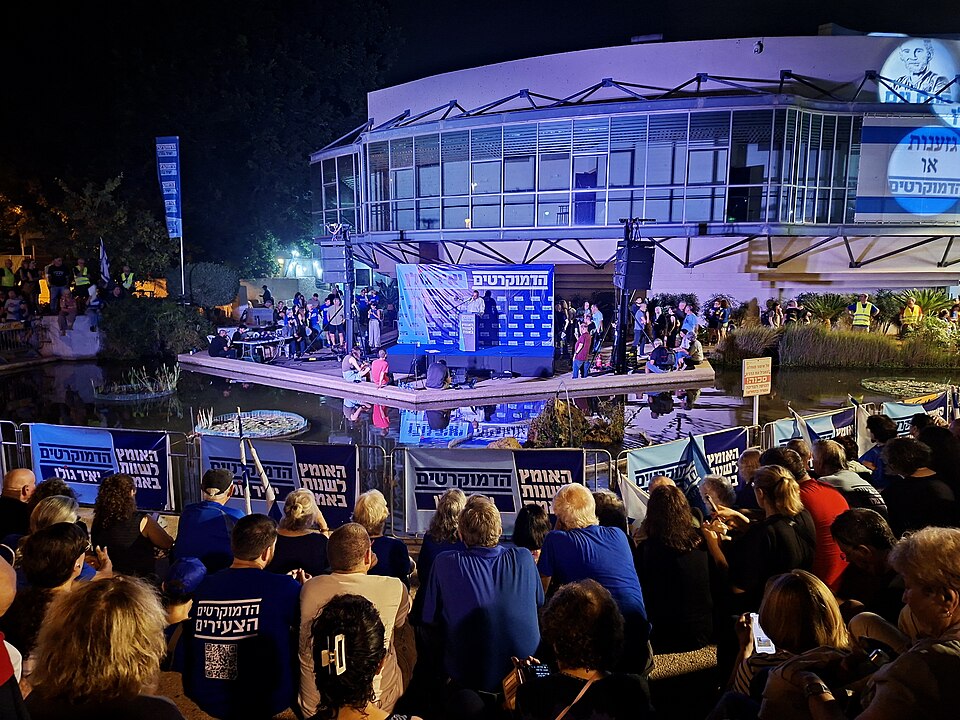
Israel will hold elections for its 38th government on Oct. 27 after the current administration became the first to last the full statutory four years since 1988. The vote is largely divided between a bloc of parties allied with current Prime Minister Benjamin Netanyahu and an informal coalition seeking to unseat him.
What’s happened so far
- After the election results are certified, the party receiving the most votes will be given a mandate to form a government.
- At present, most polling shows no bloc is likely to receive a majority of seats (61 out of 120). Until a new government is formed, the current government will stay on in a “caretaker” role. If no party is able to form a government, new elections will be scheduled. Parties are given up to 42 days to form a government and a close election could see two parties given consecutive mandates, potentially lasting almost three months.
- Israel’s Supreme Court is set to hear cases on Oct. 1 regarding the eligibility of two Arab parties after they were disqualified by the central elections committee.
- Prior to the current government, Israel had a four-year political crisis with five non-decisive elections for leadership and regular protests.
The impact
- Election day is a public holiday. Official results will be published on Nov. 4, and the deadline for appeals is Nov. 18. Transportation, hospital services, restaurants, and factories are expected to continue to operate as usual.
- Protests are very likely in the run up to and aftermath of the elections. Multiple contentious issues that have previously led to protests are seen as “on the ballot,” including: conscription of ultra-orthodox communities, the government’s handling of the lead-up and aftermath of the Oct. 7 attack, and allegations of corruption.
- Strong rhetoric and an increased risk of political violence are expected. In late September, former Prime Minister Naftali Bennett had to be escorted from an event after having an object thrown at him.
What Else Matters
Northern Ireland unrest
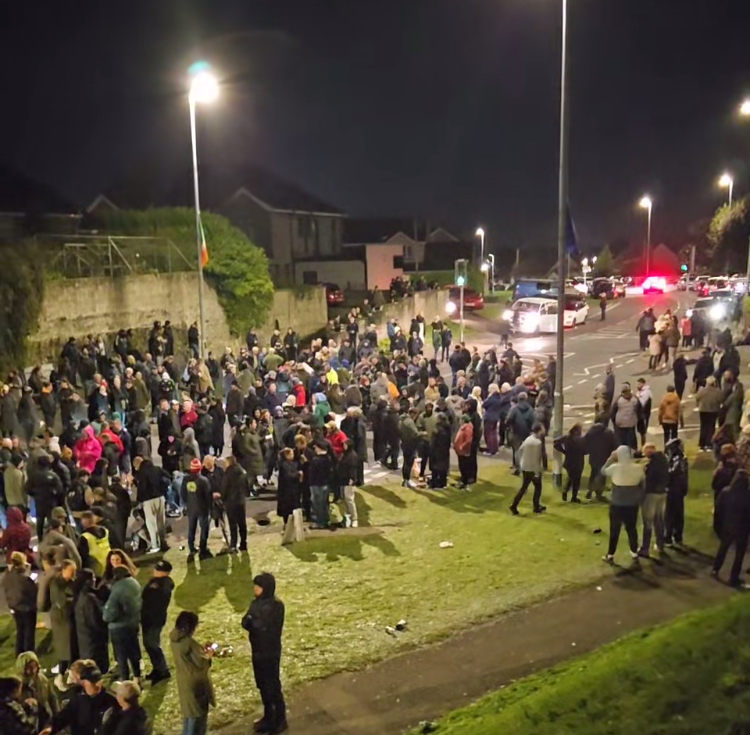
A contentious decision from a Northern Irish court to permit a march from the Orange Order, a unionist organization, through a predominantly nationalist area in Portadown has led to a standoff between demonstrators, Orange Order members and supporters and the Police Service of Northern Ireland (PSNI). The march down this stretch of road, Garvaghy Road, had been previously banned since 1998 due to it sparking protests and violence, including the killing of three Catholic children. Since Sept. 26, local residents and nationalists from across the island of Ireland have gathered to block the road in protest. PSNI negotiators have attempted to get both sides to come to an agreement with no end in sight.
Watch for: Northern Ireland has been in a largely peaceful yet fragile state since the signing of the Good Friday Agreement in 1998, which brought an end to the Troubles, a 30-year conflict that claimed over 3,500 lives. This dispute threatens that calm, pitting communities against each other who still bear the scars of the past. We are closely watching for any signs of escalation from protesters blocking the road, Orange Order members and their supporters and the PSNI. Escalation could include further road blocks, throwing projectiles, disorder and violence. Since the beginning of the dispute, disorder has broken out in Londonderry where youths have thrown petrol bombs, bottles and fireworks at PSNI officers.
South Africa mass shootings
Police are investigating after nearly 40 people died in mass shootings across three urban areas in South Africa over a one-week period in September. The violence began on the night of Sept. 22, when at least three people opened fire at a house in the KwaMakhutha area of Durban, killing 12 people and injuring two others. Over the following weekend, two separate shootings — one in Wedela, near Johannesburg, and the other in the Lwandle area of Cape Town — claimed 27 more lives and injured scores more. No arrests were immediately announced.
Watch for: The shootings come as experts report that gang violence has fueled recent mass shootings that have killed more than 160 people across South Africa so far this year. In February, President Cyril Ramaphosa called organized crime “the most immediate threat” to the country and deployed the military to support authorities grappling with crime around Johannesburg and Cape Town. After the recent shootings, Ramaphosa told reporters that authorities need “to bring the levels of criminality down throughout the country,” though he did not provide details on additional measures aimed at curbing crime.
Extended Outlook
What’s on our radar in the coming weeks…
Oct. 1-8
Oct. 1
- Beginning of peak wildfire season for New South Wales, Victoria, the Australian Capital Territory and southern Western Australia
- Arizona State Fair begins
- China National Day
- AI film festival in Astana, Kazakhstan
Oct. 2
- Austin City Limits begins
- National commemoration of Mexico’s 1968 Tlatelolco massacre
- Easyjet strike in Portugal
- Nationwide rail strike in Italy
Oct. 3
- German Unity Day
- Latvian parliamentary elections
- South Korea’s National Foundation Day
- Paraguayan health workers union to negotiate with government over salary increase demand
- Lord of Miracles processions in Lima, Peru
Oct. 4
- Bosnia and Herzegovina general election
- Brazil general election
- Paraguay municipal elections
- NFL’s Colts-Commanders in London
Oct. 5
- Quebec provincial election
- Ethiopia inaugurates new parliament
Oct. 6
- Israeli-Egyptian 1973 war anniversary
- Lionel Messi’s last match with national team in Buenos Aires
Oct. 7
- Israeli-Palestinian Gaza war anniversary
Oct. 8
- Mississippi State Fair begins
- London holds Holborn and St Pancras by-election
Oct. 9-15
Oct. 9
- Czech Senate election
- Austin City Limits
- Nobel Peace Prize announced
- Belgian unions stage protest in Brussels
- French center-left presidential primary
Oct. 10
- Global Alliance for Palestine calls for international day of protest
- North Korea’s Party Foundation Day
Oct. 11
- ASEAN Summit (Second Summit of the Year), Philippines
- Chicago Marathon
- NFL’s Jaguars-Eagles in London
Oct. 12
- IMF & World Bank Annual Meetings in Bangkok
- Columbus Day / Indigenous Peoples’ Day
- Canadian Thanksgiving
- Anniversary of Madagascar coup
Oct. 13
- World Series Game 1
Oct. 14
- Colombian union marches
Oct. 15
- Rugby League World Cup
- North Carolina State Fair begins
- South Carolina State Fair begins
Oct. 16-22
Oct. 16
- Arkansas State Fair begins
Oct. 18
- Asian Para Games 2026 in Nagoya, Japan
- Vedanta Half Marathon race in New Delhi
- NFL’s Jaguars-Texans in London
Oct. 19
- 2026 UN Biodiversity Conference
- India-New Zealand trade pact “likely” to come into effect
Oct. 20
- French legislature votes on 2027 budget
Oct. 23-31
Oct. 24
- Slovakia local & regional elections
Oct. 25
- Serbian parliamentary elections
- Bulgaria elections
- Brazilian presidential runoff (if necessary)
- NFL’s Saints-Steelers in Paris
Oct. 27
- Israel election
- Hero Men’s Asian Champions Trophy (hockey) in India
Oct. 29
- Tanzania protests crackdown anniversary
Oct. 30
- G20 foreign ministers meeting in Atlanta
- Greater Gulf State Fair (Alabama) begins
Oct. 31
- Halloween
- Summer Youth Olympics begin in Dakar, Senegal
Top photo: Supporters gather for a rally in the Beit Sapir complex in Israel’s Kfar Saba ahead of October’s Knesset elections. (Photo: ישראל זלר ISRAEL ZELLER / Wikimedia Commons / CC BY 2.5)
Thanks for reading! If you’d like the Factal Forecast in your inbox, you can sign up for free.
Verified risk intelligence by Factal supports the world’s largest corporations and 300+ humanitarian aid NGOs, helping them act faster in a world of rumors and generative misinformation. Facts save lives.
Try Factal for free or talk with our sales team (sales@factal.com) for a demo.