
 Factal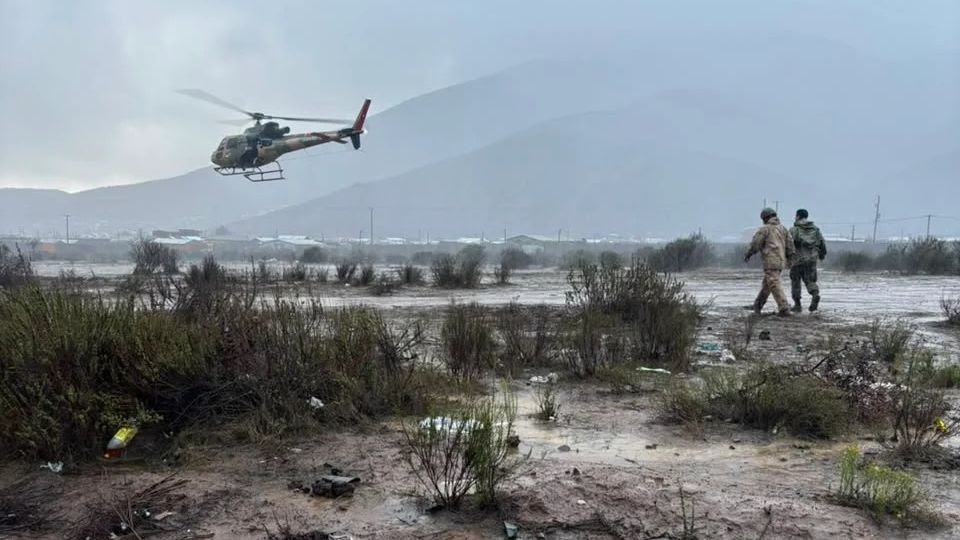
Welcome to Factal Forecast, a look at the week’s biggest stories from the editors at Factal.
We publish our forward-looking note each Thursday to help you get a jump-start on the week ahead.
Week of July 24 – 31
A Look Ahead
July 25 | WNBA All-Star Game in Chicago
The annual Women’s National Basketball Association All-Star Game will take place on Saturday in Chicago and feature the league’s biggest stars.
What’s happened so far
Chicago last hosted all-star events in 2022, when the league received criticism over closing many events to the public, citing “security concerns” following a spike in gun violence. This year, community events will take place throughout the weekend, including a 3-point contest at Wintrust Arena and the game itself at the United Center. Team practices and other events will take place at the Obama Presidential Center in south Chicago, making the WNBA the first professional sporting league to play at the 60,000 square foot building. Teams will compete for a $100,000 prize that will be divided amongst two Chicago-based organizations that work to keep women and girls involved in sports.
The impact
The WNBA All-Star Game in 2025 drew in 2.2 million average viewers. This year, the game has seen a surge in demand for tickets as fans flock to see stars like Caitlin Clark and Aliyah Boston, creating the potential for large crowds at events throughout the city.
July 27 | Philippines’ State of the Nation Address
Philippine President Ferdinand Marcos Jr. will deliver his fifth State of the Nation Address at the House of the Representatives in Manila on Monday.
What’s happened so far
The annual address comes as the Philippines struggles with an energy crisis and unresolved political turmoil. Earlier in March, Marcos declared a state of national energy emergency, calling soaring fuel prices an “imminent threat” to the country’s energy supply. According to the presidential office, the upcoming program will be “simple yet dignified,” in adherence with the government’s austerity measures in light of the energy crisis. At the start of July, the Philippines Senate opened the impeachment trial for Vice President Sara Duterte over allegations of misuse of public funds, bribery, and making threats against Marcos.
The impact
Taking into account concerns on public order and heightened political tensions, Philippine Police said they have stepped up security, with more than 20,000 officers set to be deployed across Manila in preparation for Monday’s State of the Nation Address.
July 27 | Pakistan-administered Kashmir elections
The first phase of Pakistan-administered Kashmir’s three-part regional legislative elections will begin on Monday, after weeks of unrest.
What’s happened so far
While polling was originally scheduled to begin and conclude Monday, the regional election commission decided to split the election into three phases so that security could be ensured “in all divisions in sufficient numbers” while voting takes place. The change follows recent deadly protests by banned civil group Joint Awami Action Committee (JAAC), who have called for the abolition of seats in the state legislature reserved for refugees from India-controlled Jammu and Kashmir.
The impact
Monday’s polling will be held in the Mirpur division, followed on Aug. 2 with voting in Muzaffarabad and the refugee constituencies, with the final phase on Aug. 10 for Poonch district voters. Campaigning is already underway, but local authorities remain on high alert especially in Poonch district, where JAAC activists and supporters have been holding sit-ins.
July 28 | Inauguration of Peruvian President-elect Keiko Fujimori
Leader of the conservative People’s Force party, Keiko Fujimori, will be officially sworn in as President on Tuesday, Peru’s Independence Day, after winning the election with a margin of just 50,000 votes.
What’s happened so far
Fujimori was declared the victor in the election almost a month after the run-off vote. Her rival, the left-wing candidate Roberto Sánchez, alleged the vote had been seriously compromised, citing supposed irregularities in abroad voting and saying he would not recognize her government. In her fourth run for presidency, Fujimori’s campaign focused on tackling increasing levels of organized crime in the Andean country.
The impact
Fujimori’s ascent to the presidency comes after a period of protracted political instability in Peru that has resulted in eight presidents over the past decade. Keiko Fujimori, the daughter of the disgraced former President Alberto Fujimori who was eventually jailed for crimes against humanity, remains a controversial figure in Peruvian politics and sought to soften her image during the campaign. In a speech following her victory she called for unity and said she had learned from her past mistakes. Invariably, her first challenge will be to rebuild trust in an institution that has been severely eroded and undermined by a decade of instability.
Factal is real-time, verified breaking news
Our AI detects early signals across dozens of languages and thousands of open data sources. Then, our 24/7 editorial team, the same people who produce the Forecast, verify it — fast. That’s why the world’s largest companies and NGOs choose Factal.
July 28 | US Federal Reserve meeting
The Federal Open Market Committee is set to meet for two days beginning Tuesday to assess the health of the U.S. economy and decide on a course of action for interest rates, the Fed’s key policy lever.
What’s happened so far
Following the June meeting, the first for new chair Kevin Warsh, the committee decided unanimously to hold interest rates steady. The statement mentioned that the fundamentals of the U.S. economy are strong, but noted inflation and the elevated uncertainty caused by the conflict in the Middle East as factors that were considered. Recent economic data has painted a mixed picture of the U.S. economy, with ongoing concern over gas prices, the sustainability of job growth, and consumer sentiment.
The impact
The committee can decide to raise, hold or lower interest rates, with holding being the most likely course of action, though there is a growing chorus of voices calling for a hike in rates to push back against persistent inflation. Ongoing offensive operations against Iran and the uncertainty over the status of the Strait of Hormuz are likely to feature in decision making, but could be offset by robust employment and economic activity data.
July 30 | Bank of Japan Monetary policy meeting
The Bank of Japan’s (BOJ) upcoming meeting beginning Thursday will focus heavily on interest rates as the Japanese government signals an emphasis on strong growth and price stability.
What’s happened so far
In June, the BOJ lifted its rate to 1 percent, tightening the belt on an economy navigating the energy shocks of the U.S. and Israeli conflict with Iran. This comes as the government of Prime Minister Sanae Takaichi pushes for higher wages and private sector growth in an effort to avoid a return to stagflationary pressures weighing on the economy. In an unusual government economic blueprint, the state pointed directly to a focus on growth while hinting at slowing rate hikes despite inflationary risks, saying it was “very important for monetary policy to be guided appropriately to achieve a stronger economy.” This roiled the market, as investors pushed bond yields to a 30-year high earlier this month on language suggesting closer collaboration between the government and the BOJ.
The impact
The bank is expected to stand pat on interest rates at the upcoming meeting, allowing for further market evaluation. A revised upward growth outlook is expected as well, as some rising energy costs have been offset by increasing export prices due to the growth of the AI sector. In an effort to cool fears, language has been added to the draft reassuring the independence of the central bank. Now, the market shifts toward timing the next rate increase, with nearly 70 percent of insiders pricing in another hike before October.
What Else Matters
Chile floods
At least 13 people have been killed and seven others are missing as catastrophic flooding left more than 100,000 people isolated across central and northern Chile this week. Days of torrential rain and strong winds battered the Atacama and Coquimbo regions, prompting President José Antonio Kast to declare a state of emergency. The disaster has also injured 16 people, displaced approximately 4,000 others and left thousands without electricity or drinking water. More than 20,000 homes have been damaged, including 81 that were destroyed, making the flooding one of Chile’s worst natural disasters in decades. Meteorological authorities have linked the disaster to El Niño, which has fueled unusually intense rainfall across the country this winter.
Watch for: Search and rescue operations remain underway as authorities race to reach isolated communities and locate those still missing. As weather conditions improve, the focus is expected to gradually shift toward reopening roads, restoring access to flood-hit towns and repairing damaged infrastructure. While the worst of the rainfall has passed, officials warn the danger is not over. Runoff from the foothills is expected to keep rivers elevated over the coming days, raising the risk of additional flooding and complicating recovery efforts in already hard-hit communities.
Forecast Podcast
Editors Jimmy Lovaas and Jeff Landset discuss the devastating flooding in Chile, plus more on an election in Pakistan-administered Kashmir, a State of the Nation Address in the Philippines, an inauguration for Peru’s new president, and a meeting of the U.S. Federal Reserve.
Subscribe to the show: Apple Podcasts, Spotify, and many more.
This episode includes work from Factal editors Jeff Landset, Vivian Wang, Hua Hsieh, James Morgan, and David Wyllie. Produced and edited by Jimmy Lovaas. Music courtesy of Andrew Gospe.
Saudi-Yemen war
Ships traveling through the Red Sea’s southern access point known as Bab al-Mandab are facing a renewed threat of attacks by Yemen’s Iranian-allied Houthis after a Saudi Arabian vessel was struck on Wednesday for violating the militant group’s blockade on Saudi Arabia’s Red Sea ports. The escalation marks the most significant geographical spread of the United States-Israeli war with Iran, threatening global oil supplies by further hindering Saudi Arabia’s ability to export oil by bypassing U.S. and Iranian blockades of the Strait of Hormuz. Riyadh has pledged to take “all necessary measures to protect its ships,” and President Donald Trump said the United States would “take care of business” if the situation escalated.
Watch for: Oil price shocks and knock-on costs down the supply chain are the most immediate threat, especially if Bab al-Mandeb closes. An attack could easily induce a cascade of retaliatory strikes by Saudi Arabia, the Houthis, or the United States. Many of the United States’ regional allies, including Bahrain, the UAE, Qatar, are closer to Yemen than Israel, which has already been targeted by Houthi missiles, and a broader conflict could see all of them involved to some degree, potentially paralyzing travel for periods or leading to damaging attacks in these countries. Pakistan is continuing mediation efforts toward a new ceasefire deal that may pave the way to a resumption of negotiations between Iran and the U.S. and de-escalation of tensions between their allies sharing the Red Sea’s southern coastline.
Extended Outlook
What’s on our radar in the coming weeks…
July 25-31
July 25
- 2026 WNBA All-Star Game
- Women’s Africa Cup of Nations football
July 27
- Pakistan-administered Jammu and Kashmir general elections
- Philippine President Marcos delivers State of the Nation Address
July 28
- U.S. Federal Reserve Meeting
- Peru’s Keiko Fujimori expected to be inaugurated as president
July 29
- Ohio State Fair begins
- Wacken, Germany, Open Air music festival begins
July 30
- Bank of Japan Monetary Policy Meeting
- Women’s British Open
- Lollapalooza begins in Chicago
- Bangor State Fair begins in Maine
July 31
- New Jersey State Fair begins
Aug. 1-7
Aug. 1
- State elections for Negeri Sembilan, Malaysia
- Primaries in Guam and U.S. Virgin Islands
- UK opens first ‘super-university’ as Kent and Greenwich merge
- Switzerland National Day
Aug. 3
- Maryland state lawmakers to hold a special session on redistricting
Aug. 4
- Primaries in Washington, Kansas, Missouri, Michigan and Virginia
Aug 5
- Bangladesh observes July Uprising anniversary
Aug. 6
- Myanmar President Min Aung Hlaing visits Thailand
- State Fair of West Virginia begins
- Wisconsin State Fair begins
- Primaries in Tennessee
Aug. 7
- Inauguration of 43rd president of Colombia
- Outside Lands begins in San Francisco
- Indiana State Fair begins
Aug. 8-14
Aug. 8
- New Belarus Conference in Warsaw
- Primaries in Hawaii
Aug. 9
- U.S. holds first Patriot Games
Aug. 11
- Primaries in Connecticut, Minnesota, Vermont and Wisconsin
- Wyoming State Fair begins
Aug. 12
- UEFA Super Cup in Salzburg, Austria
- Pakistan Independence Day
Aug. 13
- Illinois State Fair begins
- Missouri State Fair begins
- Tennessee State Fair begins
Aug 14
- Pakistan Independence Day
Aug. 15-21
Aug 15
- Indian Independence Day
Aug 17
- Indonesian Independence Day
Aug 18
- Primaries in Alaska, Florida, Wyoming
Aug 19
- Academy of Country Music Awards (ACMs)
Aug 21
- Alaska State Fair begins
Thanks for reading! If this was forwarded to you, you can sign up for free.
Top Photo: The Chilean Army conducts recovery operations after severe flooding hit country’s Coquimbo Region earlier this week. (Chilean Army via Ejército de Chile / ejercito.cl)
Verified risk intelligence by Factal supports the world’s largest corporations and 300+ humanitarian aid NGOs, helping them act faster in a world of rumors and generative misinformation. Facts save lives.
Try Factal for free or talk with our sales team (sales@factal.com) for a demo.