
 Factal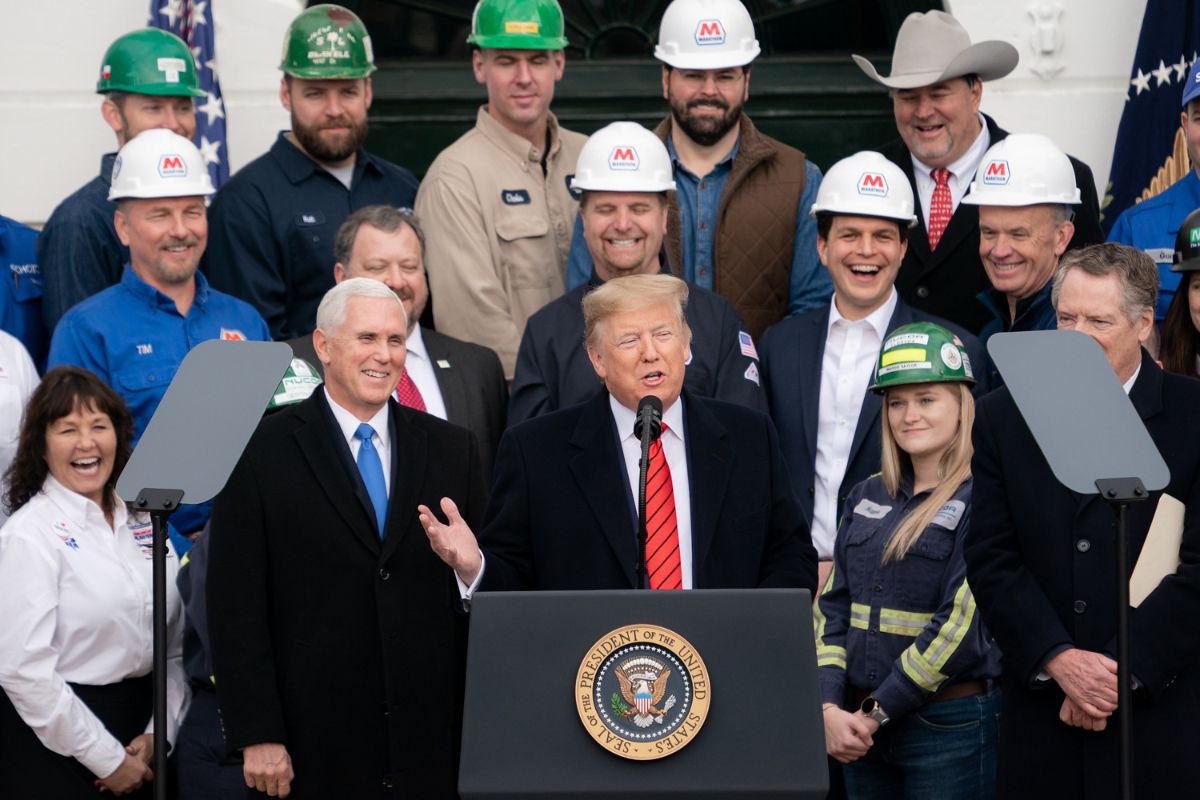
Suspected Iranian drones struck oil storage facilities in Oman and several cargo ships in the Strait of Hormuz this week as the U.S.-Israeli war on Iran nears its second week. In this week’s Factal Forecast podcast, Senior Editor Jimmy Lovaas and Editor Ahmed Namatalla discuss some of the major impacts to the region and what to watch for next.
Listen now or download on your favorite platform.
Week of March 13-20
Welcome to Factal Forecast, a look at the week’s biggest stories from the editors at Factal.
We publish our forward-looking note each Thursday to help you get a jump-start on the week ahead.
A Look Ahead
March 15 | Kazakhstan referendum on new constitution
Kazakhstan will vote Sunday on a new constitution that includes a consolidation of presidential powers and a transition to a unicameral parliament.
What’s happened so far
The initiative to overhaul Kazakhstan’s constitution, adopted in 1995, began last September when President Kassym-Jomart Tokayev proposed dismantling the country’s two chamber parliament. The new draft constitution was presented at the end of January and proposed changes to approximately 80 percent of the current document. It includes stronger presidential powers, allowing the head of state to appoint heads of the Supreme Court, Central Electoral Commission and the State Security Service as well as other institutions. The new constitution would also abolish the senate and create a unicameral parliament, consisting of 145 deputies.
The impact
Backers of the new document say it will modernize Kazakhstan and allow for legislation to be passed more efficiently, while critics argue it curtails minority rights and gives Tokayev the opportunity to potentially run in the next presidential election. Following mass violent protests in 2022, Tokaev signed a bill barring any president from running a second term, however, the adoption of a new constitution would, in theory, allow him to run again after his term ends in 2029.
March 15 | Vietnam National Assembly election
Vietnam will hold elections on Sunday to elect deputies to the National Assembly and local representatives.
What’s happened so far
Two votes are scheduled to take place on Sunday: the election of 500 deputies in the National Assembly, picked from 182 electoral posts across the country, and local state representatives, known as People’s Councils at provincial and commune levels.
The impact
The upcoming vote has been marred by controversy. Local media has reported that in some constituencies, both high-ranking officials and their staff are running for the same parliamentary seats. What’s more, 177 candidates were denied from running for the assembly elections. Their names and reasons for exclusion were not disclosed. The votes come just after the Communist Party re-appointed To Lam as its general secretary, extending his position for the next five years.
March 15 | North Korea to hold election for Supreme People’s Assembly
North Korea will hold elections on Sunday to choose deputies to the 15th Supreme People’s Assembly, the country’s legislature, in the first such vote since 2019.
What’s happened so far
North Korea’s state media said the Supreme People’s Assembly Standing Committee set March 15 for the election and established a Central Election Committee, an apparent follow-up step after February’s ruling Workers’ Party congress. That congress reelected North Korean leader Kim Jong Un as general secretary and underscored continuity in his rule by replacing half of North Korea’s central party leadership, according to South Korea’s unification ministry. North Korean media has called the election an “important event” and an “important starting point” for carrying out the goals adopted at the party congress.
The impact
Outside analysts and news agencies consider the Supreme People’s Assembly as a rubber-stamp body that formalizes decisions already made by North Korean leader Kim Jong Un and the ruling Workers’ Party. With tensions also elevated over the ongoing U.S.-South Korea Freedom Shield drills, which North Korea has condemned as a “provocative and aggressive war rehearsal,” Pyongyang is likely to continue emphasizing its messaging on defense and external threats during the election period.
March 15 | Round one of France municipal elections
France is preparing to go to the polls on Sunday and on March 22 for local elections that will choose almost 35,000 mayors.
What's happened so far
More than 900,000 candidates are running for local council, but all eyes are on mayoral races across the country. France’s far-right National Rally (RN) party has picked up steam, with some worried the traditional “front républican” block to second-round RN candidates may not hold amid renewed fervor for conservative policies following a budget crisis and immigration concerns.
The impact
The March 15 elections will be a bellwether test for France’s center-left coalition, with important races in Paris, Marseille and Le Havre having potential national implications for wider elections. The death of far-right activist Quentin Deranque in Lyon in February could also boost far-right sentiment, after being allegedly beaten to death by members of an anti-facist organization, now dissolved. For now, potential outcomes are difficult to predict, but the French political left is now facing a challenge that could change politics across the country.
March 16 | Myanmar’s new parliament convenes
The 664 members from Myanmar’s newly chosen parliament will assemble Monday in the capital Naypyidaw to reaffirm control of the country’s institutions by the military junta of leader Aung Hlaing.
What's happened so far
Myanmar held elections in late December, the first since the 2020 military coup. Roughly 40 percent of the country’s area remains under the control of various rebel groups, so voting was limited to junta-controlled areas, and reportedly saw poor turnout. More than 490 members were elected across two houses, with a majority representing the pro-junta Union Solidarity and Development Party. Another 25 percent of the seats are appointed directly by the military junta of Aung Hlaing. Another constitutional provision requires all laws to pass with 75 percent of the parliament, meaning the military can veto civilian law. Myanmar also operates under a strict regime of censorship and political repression, further damaging the country's electoral legitimacy. With that being said, Myanmar’s junta pardoned thousands of political prisoners in recent months, but not pro-democracy figurehead Aung Sang Suu Kyi.
The impact
As a first order of business, the parliament will appoint a president. Current junta leader 69-year-old Hlaing was previously thought to be preparing an exit, but will almost certainly be appointed president. Hlaing leads a military that imposed mandatory conscription on men and women in February 2024. While the junta lost control of major areas in the country’s borderlands in 2023, they retook several key cities in 2025. Fractured ethnic militias control less-populated areas in the periphery and are frequently targeted by the junta’s air force. This is in part due to new military support from China and Russia. The assumption of a new parliament is unlikely to change the dynamics of the civil war.
March 16 | Review of USMCA begins
Negotiators from the U.S. and Mexico will meet Monday ahead of a joint review later this year of the free trade agreement between the two countries and Canada.
What's happened so far
The United States-Mexico-Canada Agreement, or USMCA, went into effect in 2020, replacing the 1994 North American Free Trade Agreement. U.S. President Donald Trump, who was in his first term when he signed on to the deal, at the time touted the move as the “largest, most significant, modern, and balanced trade agreement in history.” Canada and Mexico are set to begin bilateral talks in May, while all three involved countries are scheduled to conduct a joint review of the deal by July 1.
The impact
The upcoming meetings are part of reviews scheduled to take place every six years under the terms of the USMCA. On Monday, Mexico’s Economy Secretary Marcelo Ebrard said that a majority of the country’s economic sectors support renewing the deal, though he said respondents asked for improvements likely to be discussed during the upcoming review. The agreement is set to expire after 16 years unless the United States, Mexico and Canada agree to continue it for another 16-year term. Since Trump began his second term in office, the deal has protected both Mexico and Canada somewhat from the tariffs he has put into effect.
March 18 | Confirmation hearing for new DHS secretary
A Senate confirmation hearing for President Trump's pick to be next secretary of Homeland Security is scheduled for Wednesday.
What's happened so far
Sen. Markwayne Mullin, a Republican from Oklahoma, has been tapped to lead the Department of Homeland Security after Kristi Noem was ousted. Noem became the first cabinet-level official to leave their post during the second Trump administration after a controversial stint as DHS head overseeing Trump’s mass deportation agenda as well as the fallout to multiple fatal shootings involving federal immigration enforcement.
The impact
Noem’s successor Mullin is known as a fiercely loyal Trump ally who has continuously supported Trump’s immigration crackdown, signalling little change is likely to DHS and Immigration and Customs Enforcement functions. Assuming Mullin is confirmed, he will be taking over DHS in the midst of a funding lapse as congressional Democrats continue to thwart packages to fund DHS barring reforms.
March 19 | European Council Summit in Brussels
Leaders of European Union countries will meet Thursday in Brussels to attempt to coordinate a unified response to several ongoing global situations. The slated agenda is wide-ranging — including the ongoing war in Ukraine, economic and financial matters, migration, and “other items” — but the elephant in the room is the joint U.S.-Israeli strikes on Iran.
What's happened so far
The conflict has already grown to expand European soil proper, as an Iranian drone managed to evade air defenses and strike a U.K. Royal Air Force base in the territory of EU member Cyprus. Iranian strikes on oil infrastructure in U.S. allies Bahrain, Qatar and Kuwait have seen all three countries declare force majeure, almost instantaneously creating a supply crisis. To address demand, U.S. President Donald Trump has reportedly considered easing sanctions on Russian oil, potentially undermining one of the EU’s most powerful levers for exerting pressure on Moscow. Germany, Italy, and Belgium have already hosted a virtual mini-conference on the topic ahead of the summit. The instability has also borne out in slumping stock indexes. Reuters has also reported leaders will request reform of the EU carbon market to address price volatility.
The impact
While the European response to the war has been muted thus far — German Chancellor Friedrich Merz stopped short of condemning the strikes, while French President Emmanuel Macron merely said Paris “cannot approve of them” — and mainly focused on gently warning against escalation. But the consultation in Brussels may prove the right venue to hammer out a coordinated response, including concrete action. It is difficult to predict what that action might be — any degree of European disengagement with Trump, who values loyalty fiercely, would be noteworthy, but would pale in comparison to the leaders agreeing to reduce pressure on Russia in order to address energy concerns in their own countries.
What Else Matters
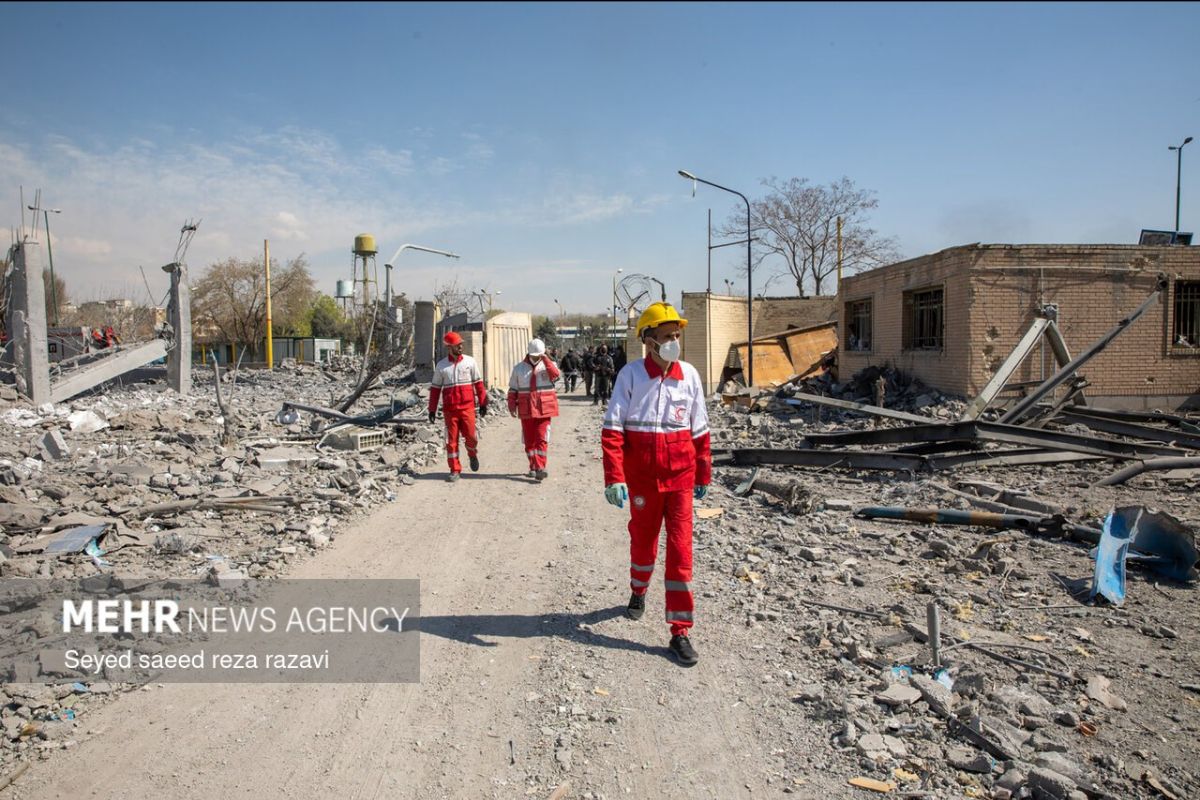
Iran war
The United States is giving conflicting projections nearly two weeks after the start of its coordinated attack with Israel on Iran that has killed more than 1,200 people and caused global energy prices to spike. The United States’ Arab allies in the Persian Gulf continue to suffer near daily Iranian attacks against U.S. military presence on their soil while some of those projectiles and others from Iran’s Lebanese ally Hezbollah are also causing damage in Israel. President Donald Trump declared on Monday the war is “very complete” and would be over “very soon,” while Defense Secretary Pete Hegseth said the United States “will not relent until the enemy is totally and decisively defeated.”
Watch for: Despite suffering significant damage in daily U.S. and Israeli airstrikes, including Israel’s bombing of fuel depots that caused toxic rainfall in Tehran, Iran is showing defiance with the selection of Mojtaba Khamenei as its new leader and ruling out ceasefire talks after getting attacked by the United States and Israel in the midst of the past two rounds. And despite claims by the U.S. and Israel that they’ve destroyed most of Iran’s military capabilities, the Strait of Hormuz remains effectively shut down, most of the region’s airspace remains closed and attacks on military, energy and civilian assets in the region are continuing. The conflict still has the potential to expand, as Arab Gulf countries have threatened but not yet taken offensive military action against Iran, while the latter’s allies Houthi militia in Yemen and Russia have yet to formally get involved.
Iran war continues as ships targeted in vital waterway
Editors Jimmy Lovaas and Ahmed Namatalla discuss the latest escalations in the Iran war, plus more on Kazakhstan voting on a new constitution, an election in Vietnam, trade negotiators from the U.S. and Mexico meeting, and a European Council Summit in Brussels.
Subscribe to the show: Apple Podcasts, Spotify, and many more.
This episode includes work from Factal editors Ahmed Namatalla, James Morgan, Jess Fino, Theresa Seiger, and Matthew Hipolito. Produced and edited by Jimmy Lovaas. Music courtesy of Andrew Gospe.
Extended Outlook
What's on our radar in the coming weeks…
March 13-20
March 15
- Vietnam National Assembly election
- Miami Open
- Kazakhstan referendum on new constitution
- Round 1 of France municipal elections
- North Korea to hold election for Supreme People's Assembly
March 16
- Myanmar's new junta-backed parliament to convene in Naypyidaw
- Review of USMCA begins
March 17
- Illinois Senate primaries
March 18
- Confirmation hearing for new DHS secretary
March 19
- European Council Summit in Brussels
- Eid al-Fitr
March 21-27
March 21
- South Australia election
March 22
- Round 2 of France municipal elections
- Slovenia parliamentary election
- Republic of the Congo presidential election
- Germany's Rhineland-Palatinate holds state election
- Italian judicial reform referendum
March 23
- FIFA final World Cup qualifiers in Monterrey and Guadalajara, Mexico
March 24
- Danish general election
March 26
- 14th WTO Ministerial Conference
March 28-April 3
April 1
- India begins first phase of 2027 Census
April 2
- Passover
April 4-10
April 4
- Maldives election and referendum
April 6
- The Masters tournament in Augusta, Ga.
Top photo: President Donald Trump, joined by Vice President Mike Pence and U.S. Trade Representative Robert Lighthizer, delivers remarks at the signing ceremony for the United States-Mexico-Canada Trade Agreement in January 2020. (Photo: Official White House Photo by D. Myles Cullen)
Thanks for reading! If you want the Factal Forecast in your inbox, you can sign up for free.
Factal gives companies the facts they need in real time to protect people, avoid disruptions and drive automation when the unexpected happens.
Try Factal for free or talk with our sales team (sales@factal.com) for a demo.