
 Factal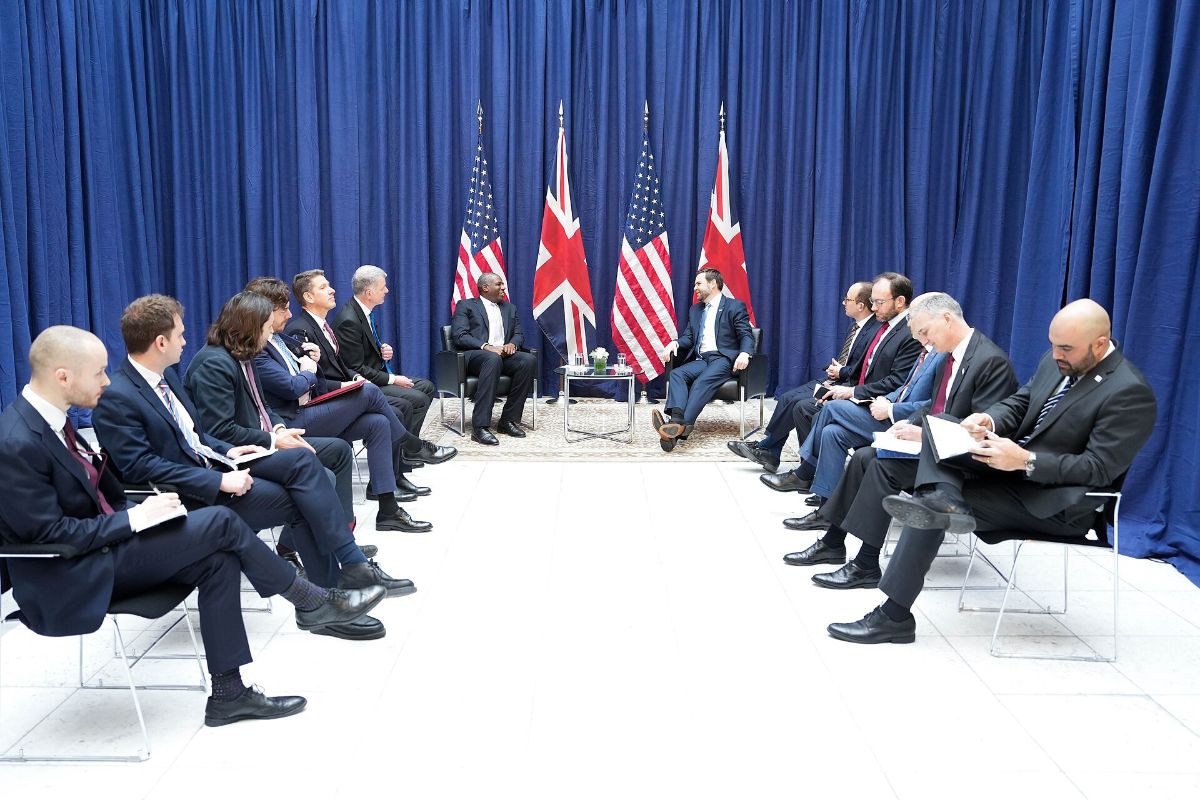
Welcome to Factal Forecast, a look at the week’s biggest stories from the editors at Factal.
We publish our forward-looking note each Thursday to help you get a jump-start on the week ahead.
Russia’s relentless attacks on Ukraine’s energy grid continued this week as the country grapples with frigid temperatures. In this week’s Factal Forecast podcast, Senior Editors Jimmy Lovaas and Alex Moore discuss the life-threatening conditions the situation brings to the ongoing humanitarian crisis and the effects on everyday life, including impacts to businesses and schools.
Listen now or download on your favorite platform.
Week of Feb. 13-20
A Look Ahead
Feb. 13 | Munich Security Conference
The 62nd Munich Security conference starts Friday in Germany with security in Europe looking increasingly precarious as Russia’s full-scale invasion of Ukraine enters its fifth year and transatlantic relations falter.
What’s happened so far
At last year’s conference, U.S. Vice President JD Vance delivered a speech highly critical of European powers, alleging restrictions on free speech and “opening the floodgates” to mass migration. This year is expected to be no less divisive, as the White House has increased calls for Europe to play a greater role in its own security and signaled readiness to impose punitive tariffs on traditional allies. Secretary of State Marco Rubio will lead the U.S. delegation this year, and more than 50 other world leaders are expected to attend.
The impact
The Munich Security Report cites U.S. President Donald Trump’s “wrecking-ball politics” as a growing source of tension between Europe and its traditional transatlantic partner. Earlier this year, Trump’s repeated claims that the United States needs Greenland for its security sent shockwaves through Europe. While that crisis appears to have de-escalated for now following his announcement of a future deal, European and American approaches to collective security continue to diverge. As the anniversary of Russia’s full-scale invasion of Ukraine approaches, European powers continue to question Trump’s pursuit of peace, raising concerns over a potential peace deal that would be overly favorable to Moscow.
Feb. 13 | Deadline for U.S. government funding
The second U.S. federal funding showdown in two weeks could come on Friday if a congressional agreement isn’t to be reached in time.
What’s happened so far
The standoff comes down to funding for the U.S. Department of Homeland Security, which, after the shooting deaths of Alex Pretti and Renee Nicole Good in Minneapolis, is under strong bipartisan scrutiny. Democrats have presented a proposed budget and reforms though Republicans have called it “nonstarter” and a “Christmas list for the press.” Democrats want federal agents to be required to have warrants before entering private property, while House Speaker Mike Johnson said there weren’t enough judges or enough time to make obtaining judicial warrants reasonable for officers, despite Democrats wishes, among other things.
The impact
Whether or not a deal will be made this week remains unclear as both Democrats and Republicans dig in their heels. But the stalling may not hamper the DHS as much as Democrats would like — ICE and CBP already received $73.3 billion in additional funding under the Trump administration’s One Big Beautiful Bill last year.
Feb. 15 | T20 India-Pakistan cricket match
Pakistan will face India in a highly-politicized T20 format cricket match in Colombo, Sri Lanka, on Sunday after reversing an initial decision to boycott the match.
What's happened so far
More than 325 million people are expected to watch the rare matchup between rivals India and Pakistan, dwarfing even Super Bowl viewership. This year’s tournament is being played across India and Sri Lanka in the Twenty20 (T20) cricket format, which shortens games to roughly three hours and offers a more television-friendly product than the One Day International format used in the main Cricket World Cup. Pakistan initially planned to boycott the match against India in solidarity with Bangladesh, which has completely withdrawn from the tournament. Political tensions between Bangladesh and India have escalated since the July 2024 revolution that overthrew India-backed Bangladeshi Prime Minister Sheikh Hasina. India-Pakistan relations are equally sour following the rocket exchanges in May 2025 and the ongoing dispute over Jammu and Kashmir’s sovereignty.
The impact
After representatives from the International Cricket Committee flew to Islamabad for negotiations, Pakistan capitulated late Monday and agreed to play in neutral Sri Lanka. While Pakistan has agreed to meet India in this tournament, its players remain barred from competing in the Indian Premier League, the world's most lucrative club cricket competition. The match will bring in an estimated $250 million in tournament revenue, in a sport where roughly 80 percent of all profits come from Indian fans. While India is the betting favorite to win the whole tournament, Pakistan is one of the world's strongest teams, making a later-stage rematch possible.
Feb. 16 | AI Impact summit in Delhi
The India Artificial Intelligence Impact Summit will take place at Bharat Mandapam convention center in central Delhi starting on Monday.
What's happened so far
The week-long event, billed as the world's largest AI event, follows a similar summit in Paris last year and comes after India hosted seven regional AI conferences over the past four months in Meghalaya, Gujarat, Odisha, Madhya Pradesh, Uttar Pradesh, Rajasthan and Kerala.
The impact
Delegations from more than 100 countries are expected to attend the summit, as India seeks to position itself as a global leader in artificial intelligence. A zoning plan will divide the capital into 10 sectors to minimize disruptions, with some 4,000 traffic officers will be deployed to manage congestion. Officials have described the event as “impact-focused,” shifting the emphasis from regulation to applications of AI in public services, governance and industry.
Feb. 17 | Lunar New Year
Several Asian countries will celebrate the start of the Year of the Horse on Tuesday, with mass travel already underway and festive events planned throughout the week.
What's happened so far
Known as the Spring Festival in China, Seollal in Korea and Tet in Vietnam, Lunar New Year is a major holiday across parts of East and Southeast Asia. Its date varies each year, falling between January and February according to the lunar calendar, which is based on the moon's cycles. Countries across Asia and diaspora communities worldwide mark the occasion with family gatherings, different traditions and cultural events.
The impact
China’s annual travel rush during the Spring Festival, often described as the world’s biggest human migration, already started last week. With the extended nine-day public holiday this year, the government estimates a record high 9.5 billion trips will be made during a 40-day period around the festival.
Feb. 19 | National Governors Association Meeting at White House
The annual National Governors Association meeting starts Thursday in the U.S. capital.
What's happened so far
As part of the annual event held in Washington, D.C., which brings together the governors of all U.S. states and commonwealth territories, it has been customary for attendees to meet with the president in the White House. This year, however, President Donald Trump has broken with precedent by excluding Democrats from the meeting, a decision the association criticized.
The impact
While the White House did not provide an explicit reason for the decision, last year's National Governors Association meeting featured a notable exchange in which Maine Gov. Janet Mills confronted Trump over her state’s decision not to comply with White House executive orders targeting transgender athletes. The meeting also comes as some Democrat-run states are moving to end local and state-level law enforcement cooperation with federal immigration enforcement, setting up another potential clash with the executive branch as federal anti-immigrant operations expand into cities.
Feb. 19 | Former South Korean President Yoon sentencing
On Thursday, a South Korean court is scheduled to rule in the insurrection case against former President Yoon Suk Yeol.
What's happened so far
In December 2024, Yoon declared martial law, citing a need to protect the state from “antistate forces.” Yoon was later removed from office following a constitutional court ruling that he violated the country’s constitution by mobilizing state forces to “obstruct the exercise of legislative authority.” Yoon faces several pending court cases, having already been sentenced to five years in January. The ruling on Feb. 19 relates to an insurrection indictment.
The impact
The insurrection charge is linked to allegations that Yoon sealed off South Korea’s parliament to prevent the martial law decree from being blocked and ordered the arrest of opposition leaders. South Korean prosecutors have sought the death penalty for Yoon. Although capital punishment remains legal in South Korea, the last known execution was carried out in 1997, making it unlikely that Yoon would be actually be executed even if sentenced to death.
What Else Matters
Kyiv energy crisis
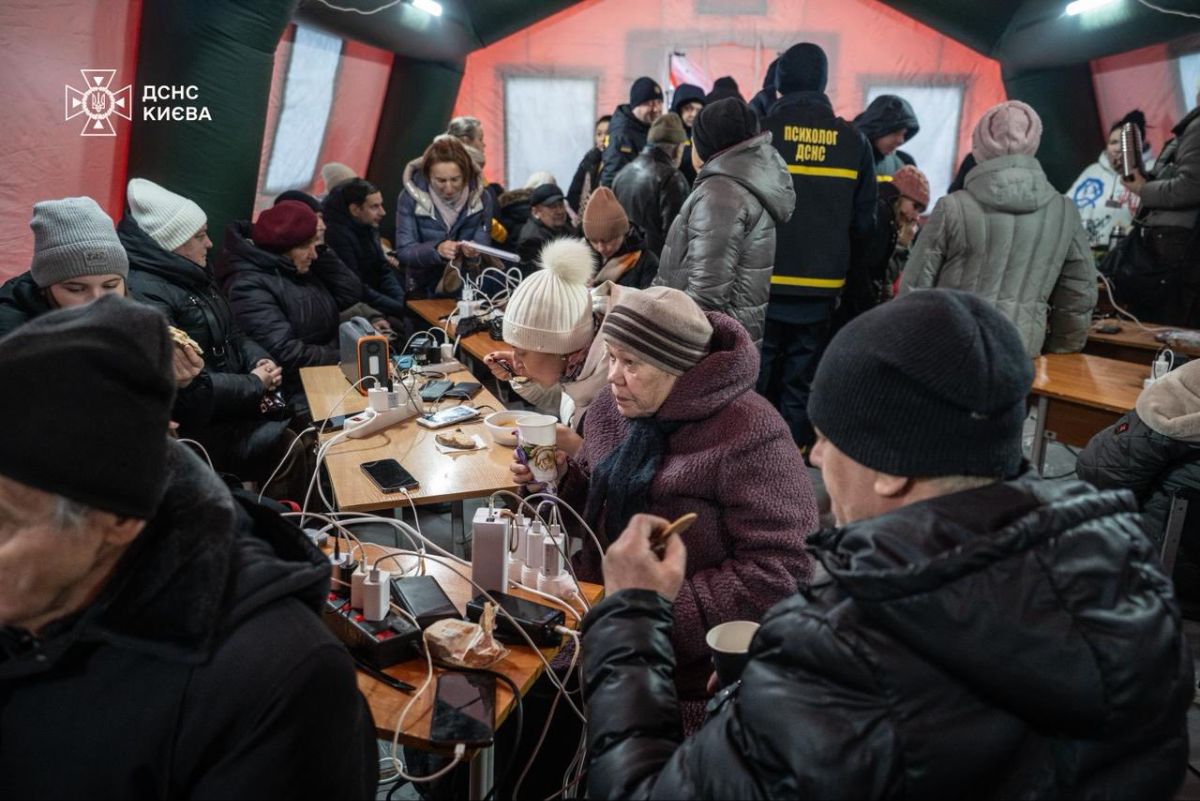
Ukraine’s battered energy grid, which has endured constant nationwide bombardment every winter since 2022, has faced a particularly intense season of Russian strikes amid extreme life-threatening freezing temperatures. The combination of heavier and more precise attacks with extreme freezing weather has created a humanitarian crisis across Ukraine, with millions exposed to rolling power and heating outages. In January alone, Russia fired nearly 4,600 long-range projectiles into Ukraine, with many of the largest nights of strikes coinciding with the coldest temperatures.
Watch for: While the effects have reverberated across the country, including western cities near the Polish border such as Lviv, the capital Kyiv has been the epicenter of the crisis. Russian strikes have succeeded in destroying major thermal power plants in Kyiv, creating conditions so harsh at the height of winter that the city’s mayor urged civilians to evacuate temporarily, a call more than half a million Kyiv residents heeded. The harsh humanitarian conditions have triggered trickle down impacts as well, such as worsening food scarcity. Repairing Ukraine’s electrical grid this time around will take months given the intensity of the winter strikes, with electricity imports or reserves unable to account for the systemic electrical deficit the entire country faces. The humanitarian crisis has resulted in life in Kyiv grinding to a halt, with schools, cafes and other businesses all forced to close.
Editors Jimmy Lovaas and Alex Moore discuss the energy crisis impacting Ukraine due to relentless Russian strikes on energy infrastructure, plus more on the Munich Security Conference, Lunar New Year celebrations, former South Korean President Yoon’s sentencing, and the National Governors Association Meeting at the White House.
Subscribe to the show: Apple Podcasts, Spotify and many more.
This episode includes work from Factal editors Alex Moore, James Morgan, Hua Hsieh, and Michael Archer. Produced and edited by Jimmy Lovaas. Music courtesy of Andrew Gospe.
U.K. Prime Minister Starmer’s leadership crisis
U.K. Prime Minister Keir Starmer remains in power following a turbulent few days which saw members of his own party calling for him to step aside. Starmer, who was swept into power in July 2024 following a landslide victory for his Labour Party, has faced a difficult job since then, with his party and own approval ratings lagging as voters remain dissatisfied with government performance. Recent weeks have seen him weathering a storm worsened by fallout from Epstein files and his appointment of a political grandee as ambassador to the United States who was then sacked from the role over his links. Starmer’s position looked shaky at the beginning of the week following the resignation of two key aides, leading some in his own party to call for him to step aside.
Watch for: Starmer appears to have the support of his Cabinet and the parliamentary party for now, but his position still looks rocky ahead of May elections where Labour is expected to receive a punishing result. Labour’s rulebook makes it difficult for lawmakers to oust him, requiring a challenger to emerge with scores of signatures from MPs, but the easier road would be the departure of his top team. Any Cabinet minister resigning would be a serious blow to him, and leave him in a perilous position. Starmer, addressing the party’s MPs in closed session on Monday night, vowed to fight on.
Extended Outlook
What's on our radar in the coming weeks…
Feb. 13-20
Feb. 13
- Deadline for U.S. government funding
- Munich Security Conference
Feb. 15
- India-Pakistan T20 World Cup cricket match
Feb. 16
- Presidents' Day in U.S.
- AI Impact summit in Delhi
Feb. 17
- Lunar New Year
Feb. 18
- Ash Wednesday
- First night of Ramadan
Feb. 19
- Former South Korean President Yoon to be sentenced over 2024 insurrection
- National Governors Association meetings at White House
Feb. 20
- Supreme Court to consider President Trump's petition to review verdict of E. Jean Carroll case
Feb. 21-27
Feb. 22
- Laos National Assembly election
Feb. 23
- ICC confirmation of charges hearing for former Philippine President Duterte
Feb. 24
- Fourth anniversary of Russia’s invasion into Ukraine
- Trump delivers U.S. State of the Union
Feb. 25
- New U.K. dual citizenship passport rules go into effect
Feb. 26
- Former U.S. President Bill Clinton testifies before House committee
Feb. 27
- Former U.S. Secretary of State Hillary Clinton testifies before House committee
Feb. 28-March 6
March 1
- SBA will no longer guarantee loans for small businesses owned by foreign nationals
March 4
- China's annual "Two Sessions"
- Tokyo High Court to issue ruling over Unification Church dissolution request
- U.S. Secretary of Homeland Security Kristi Noem will appear before the House Judiciary Committee
March 5
- Nepal parliamentary elections
March 6
- Paralympic Winter Games begin
March 7-13
March 8
- Colombia legislative election
Thanks for reading! If you'd like the Factal Forecast in your inbox, you can sign up for free.
Top photo: British Foreign Secretary David Lammy meets with U.S.Vice President JD Vance at the Munich Security Conference in 2025. (Photo: Elliot Vick / FCDO)
Factal gives companies the facts they need in real time to protect people, avoid disruptions and drive automation when the unexpected happens.
Try Factal for free or talk with our sales team (sales@factal.com) for a demo.