
 Factal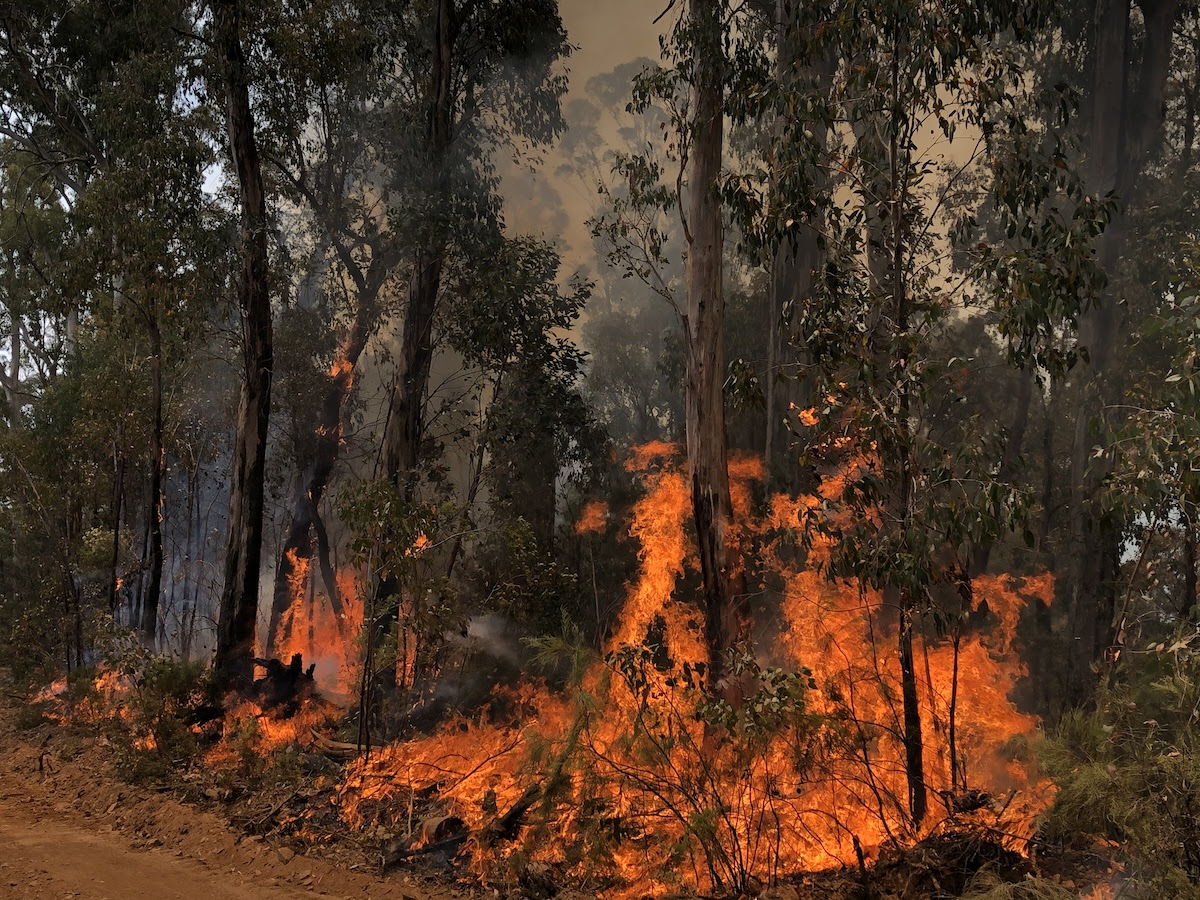
As worsening wildfire seasons threaten forced relocations, Australia scrambles to adapt
It was an all-too-familiar sight for southeast Australia in the opening days of 2026: deadly bushfires burning across the state of Victoria. As flames fanned across mostly rural areas, hundreds of homes went up in smoke.
While the extent of the destruction did not reach the level of the Black Summer fires that gripped the country in 2019 and 2020, the estimated 900,000 acres burned over the course of a week may be a foreboding sign of things to come.
Temperatures soared above 100 degrees Fahrenheit in early January, with nearly every state in the country placed under severe or extreme heat warnings. Coupled with already dry conditions, lightning strikes were the main culprit for dozens of fires that destroyed more than 900 structures before being brought under control. The heat would return again at month’s end — with Victoria posting its hottest maximum on record of 120 degrees Fahrenheit — but avoided further significant fire damage.
Hot summers are nothing new for Australia. But both the increased frequency and intensity of heat waves have put the country at increased risk of devastation.
“It’s fairly uncontroversial at this point, or at least should be, that anthropogenic climate change is having a significant, and, going forward, perhaps catastrophic impact on weather patterns in general,” Factal’s Oceania Editor Matthew Hipolito said. “[For] wildfires in particular, extreme droughts and extreme heat waves are getting more common.”
“The economic pressures are widespread, and you are going to see areas that are becoming more expensive to live in [and] more expensive to insure.”
A report released in November by the Insurance Australia Group (IAG), in partnership with the U.S. National Center for Atmospheric Research, claimed that climate change was driving “hotter, drier and more-fire prone conditions,” with more “extreme fire weather days.” Land surface temperatures in the country have risen nearly 3 degrees Fahrenheit from the pre-industrial (1850-1900) level and 2020.
According to analysis from World Weather Attribution, heat waves like the one across southeast Australia in early January were “about five times more likely to occur” than in a preindustrial climate, hedging that the figure was likely an “underestimate.”
That heat, and the risks that come with it, has far reaching implications. The IAG report went as far as to suggest relocation “may be the most viable long-term solution” for some high-risk areas, but that’s not a uniquely Australian concern.
“It’s really, really a global thing,” Hipolito said. “Like with the Palisades Fire in Los Angeles last year, that fire and other global disasters added so much pressure to the natural disaster insurance market that is driving rates even in Australia an ocean away.”
The idea of permanent relocation comes as insurers face increased payouts from weather-related disasters. January’s bushfires caused more than $200 million in insured losses according to the Insurance Council of Australia, while the industry paid out $22.5 billion for extreme weather events between 2020 and 2025, a 67 percent increase from the previous five years.
Australia’s Climate Risk Assessment, released in September, suggested as many as one million homes could be effectively uninsurable by 2050 due to climate-fueled disasters.
“The economic pressures are widespread, and you are going to see areas that are becoming more expensive to live in, more expensive to insure and the more it’s going to impact the local economies of these places very, very strongly, because a lot of these places are in the remote areas where they are more vulnerable to that kind of shock,” Hipolito said.
“The way that Australia has gone about it, from the ground level up to the highest levels of government, that’s not just wildfire mitigation, but climate change mitigation overall. That’s something that would go a long way towards ensuring these best outcomes.”
With that knowledge in hand, and lessons learned from the Black Summer fires that killed more than 30 people, the Australian government has taken several steps in recent years to address the increasing risks that come with a changing climate. That has included more than $100 million AUD in funding from 2024-25 to support the National Aerial Firefighting Centre fleet, while a new research hub aims to advance findings in fire safety engineering, advanced modeling, and risk assessment. Several electric providers have trialed new technology to detect potential power line faults, which could prevent a common source of fire ignitions.
The country also adopted a new national warning system, in an effort to standardize its guidance for residents in the event of an emergency and reduce confusion over what steps are needed to protect life and property. A full overhaul of mobile disaster alerts has been delayed, but is currently expected to roll out in 2027.
“They were trying to address failures at every level of responsibility for wildfire prevention and recovery, and that’s something that’s very, very heartening, because there’s a lot of people out there who are clamoring for things to be done at one level, but not necessarily another,” Hipolito said. “The way that Australia has gone about it, from the ground level up to the highest levels of government, that’s not just wildfire mitigation, but climate change mitigation overall. That’s something that would go a long way towards ensuring these best outcomes.”
That type of collaboration could serve as an example to other countries moving forward, as climate-fueled disasters show little sign of easing.
Victoria made it through its latest historic heat wave relatively unscathed, but fires sparked again in February northeast of Melbourne, prompting evacuations in a remote area and serving as a reminder of the ongoing danger the region continues to face.
Written by Joe Veyera. Edited by Jillian Stampher.
Top Photo: The Black Summer fires of 2019-20, including the Tambo Complex near Victoria, seen here, are considered some of the most catastrophic on record for Australia. (Flickr/BLM Idaho/CC BY)
Further reading:
- Review Factal’s coverage of the 2025-26 wildfire season in Victoria, on our topic page (members link)
- Read the third edition of the Severe Weather in a Changing Climate report, released by the Insurance Australia Group in partnership with the U.S. National Center for Atmospheric Research
- Watch this 2023 7NEWS Australia report that details lessons learned from the Black Summer fires

Thanks for reading! If you enjoyed this edition, sign up here to receive The Debrief in your inbox on the first of every month.
Factal gives companies the facts they need in real time to protect people, avoid disruptions and drive automation when the unexpected happens.
Try Factal for free or talk with our sales team (sales@factal.com) for a demo.