
 Factal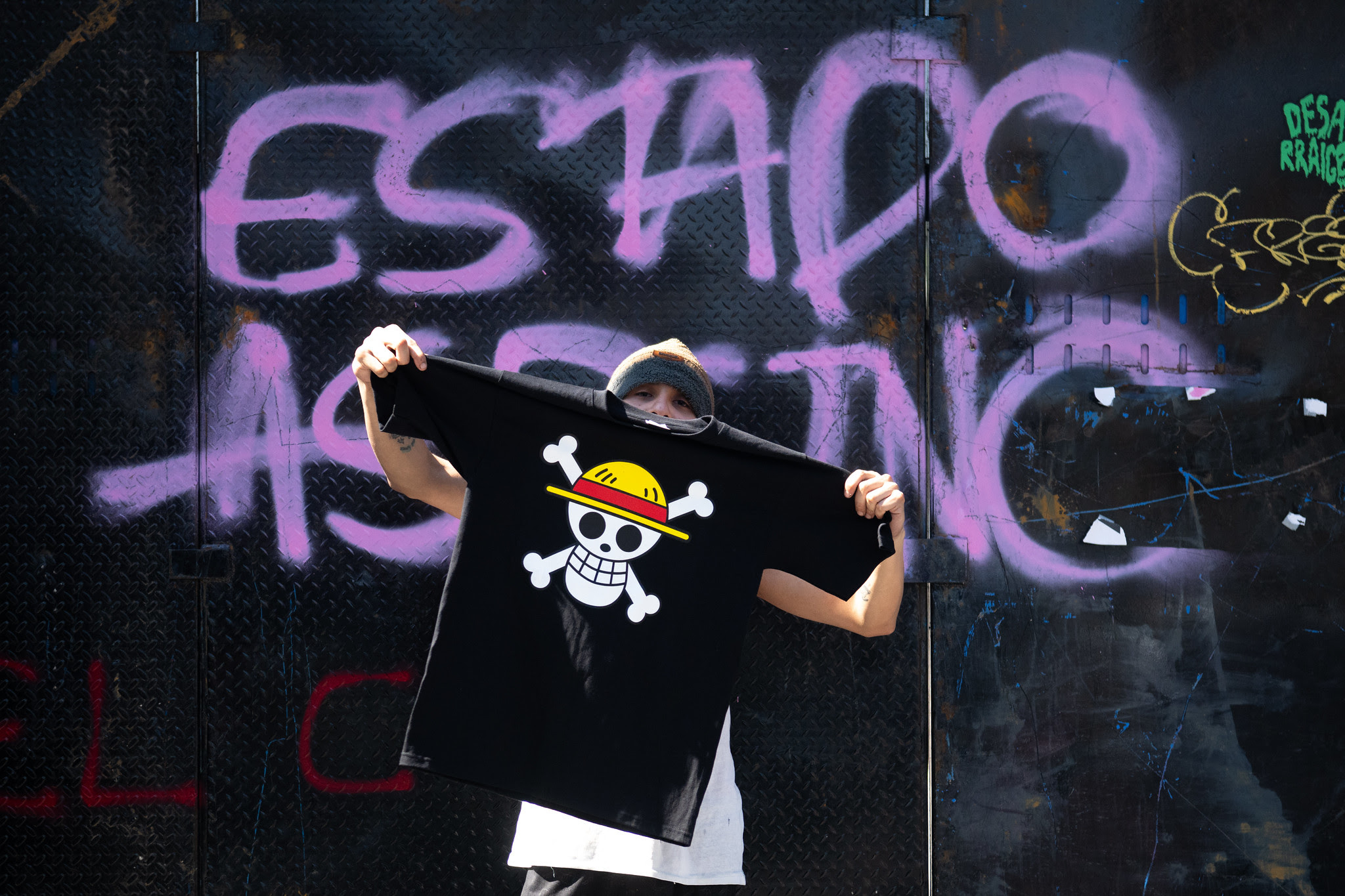
In 2025, youth protests around the world were cataloged under the one-size-fits-all banner of “Gen Z protests,” making it harder to parse granular facts.
In 2025, the term “Gen Z protests” took root, as youth movements, often organized under one flag in online spaces, ousted governments in multiple countries. The protesters, inspired by cross-border demonstrations, were often met with force. In Nepal, Madagascar and Bulgaria, they overturned the government, while in Tanzania, they ended in a deadly crackdown.
In September, backlash against a social media ban and “nepo kids” sparked protests across Nepal. Photos showed young people armed with banners and Japanese anime “One Piece” flags on the first day. Hours later, the parliament building and a nearby hotel were on fire, with deaths and injuries reported. By the end of the month, some 75 people were confirmed dead in violence that saw the prime minister flee and an interim leader chosen in consultation with a youth leader.
Similarly, a November protest over an assassination in Mexico City turned violent within a few hours, with crowds tearing down barricades and throwing rocks at police officers who responded with tear gas and stun grenades.
“We saw these violent clashes, protesters pulling down barricades, tear gas; afterwards authorities said about 100 police officers were hurt nationwide, and there were a number of civilians as well as journalists [injured] throughout the country,” Factal Editor Jeff Landset said.
Shortly after the protests, both the youth and leaders in Nepal and Mexico accused “bad actors” of either supporting or infiltrating the Gen Z-led protests. The youth in Nepal denied to media outlets and in online spaces being responsible for the violence, claiming infiltrators took advantage of the protest — a claim Nepal’s army appeared to support.
Mexican President Claudia Sheinbaum has also since accused millions of bots operating from outside Mexico of promoting the November 15 protest, with her administration naming billionaires and businessmen as alleged sponsors of the protests.
“I think if you went through the footage on November 15 and looked at the protests in the Zocalo in Mexico City, and in other places in the country, you’ll see legitimately young people protesting,” Landset said. “In some of the more publicized protests since then, the people who are being photographed and videotaped in these protests are decidedly not Gen Z in terms of their age … I’m not sure there will be full clarity on the situation.”
“The people who are being photographed and videotaped in these protests [since Nov. 15] are decidedly not Gen Z in terms of their age … I’m not sure there will be full clarity on the situation.”
Despite protesters using similar tactics and flags, what saw success in one part of the world did not always translate successfully in other countries. Media labeled the Nepal protests as the Gen Z “playbook,” but varying factors, ranging from the size of the crowds, size of the country, the use of police force and a precedent for protests, ultimately determined what movements led to change.
“Nepal, in its recent history, has had a history of successful protests overthrowing a government,” Factal Asia-Pacific Regional Lead Vivian Wang said. “That makes it more likely that a protest can successfully overthrow the government. And then there’s even more recent history in a neighboring country, Bangladesh, overthrowing their government.”
Bulgaria is another such country, with a history of protests that led to government collapse.
“It’s a case of history repeating itself with Bulgaria most of the time,” Factal Editor James Morgan said.
In November, youth-led protesters in Bulgaria rose up after a proposed budget that hiked taxes and social security contributions but raised police wages. Again, public ire snowballed from anger over a singular issue to widespread discontent with corruption, toppling a government.
“These protests, in their size, are very reminiscent of the protests that toppled the previous Gerb government in 2020 … and that was very much focused on corruption as well,” Morgan said. “I think the thing that sets it apart in this particular case was the participation of young people … but I don’t know if you would say that Gen Z is driving it, because I think it’s the millennials as well.”
Nepal and Bulgaria also had something else in common that potentially tilted the outcomes of an uprising — middling military forces.
“Nepal doesn’t have quite as large of an army as either India or Pakistan,” Wang said.
Both India and Pakistan had multiple mass protests over the years that did not culminate in significant change as the government and security forces hold far more power to stamp out any sparks of revolution.
“I think it’s important to consider that the new government in Madagascar is not really a reflection of the popular uprising.”
In East Africa, the outcome of youth-led protests also predicated on the role of the military.
Three weeks of leaderless youth demonstrations in Madagascar that started at the end of September — initially organized against utility cuts before embracing a wide range of issues — ended when Capsat, the elite military unit, endorsed the protest movement and installed its head Michael Randrianirina as the president. Nearly two dozen people were killed, which the UN blamed on security forces’ response.
“I think it’s important to consider that the new government in Madagascar is not really a reflection of the popular uprising,” Factal Editor Owen Bonertz said. “It just has much more to do with the fact that power is very concentrated in the military … always has been. There is a history of military coups and in particular this one unit of the military, the Capsat.”
Bonertz pointed to protests in Tanzania as a sort of counter example to the unrest in Madagascar.
“Tanzania is really clamping down and becoming more authoritarian in response to the protests, whereas Madagascar has not necessarily done that,” Bonertz said.
Tanzania’s youth protests coalesced following the presidential election on Oct. 29 after the government cracked down on dissent and the opposition in the run-up to the vote. Amnesty International reported hundreds of people died in the ensuing unrest when the protesters were met with deadly force by the police.
“Maybe that’s just a function of the fact that Madagascar has a weak state, a weak police force and is clearly not as in control of their territory as Tanzania has been with one single party for its entire post-independence history,” Bonertz said.
The year ended with possibly hundreds killed across these protests, millions of dollars in damages and the investigations into it all, without a clear answer if there is one-formula-fits-all that works. Despite this, people still continue to look to Gen Z for the change they desire from politics to climate, leaving much unknown for 2026.
Further reading:
- Review Factal’s coverage of protests against the assassination of Uruapan, Mexico, mayor on our topic page (members link)
- Read Factal’s updates on Tanzania’s deadly crackdown over elections on our topic page (members link)
- You can find Factal’s coverage here on how a draft budget bill ultimately saw Bulgaria’s government resign (members link)
- Review Factal’s topic page on Nepal’s social media ban and subsequent protests (members link)
- Find Factal’s coverage of anti-government protests led by the youth in Madagascar on our topic page (members link)
Thanks for reading! If you enjoyed this edition, sign up here to receive The Debrief in your inbox on the first of every month.
Top Photo: Protesters in Mexico City were seen carrying the Japanese manga One Piece flag at the Nov. 15, 2025, demonstrations against cartel-linked violence, a banner seen at youth protests in multiple countries over the past year. (Photo: Flickr/Eneas / CC BY 4.0)
Verified risk intelligence by Factal supports the world’s largest corporations and 300+ humanitarian aid NGOs, helping them act faster in a world of rumors and generative misinformation. Facts save lives.
Try Factal for free or talk with our sales team (sales@factal.com) for a demo.