
 Factal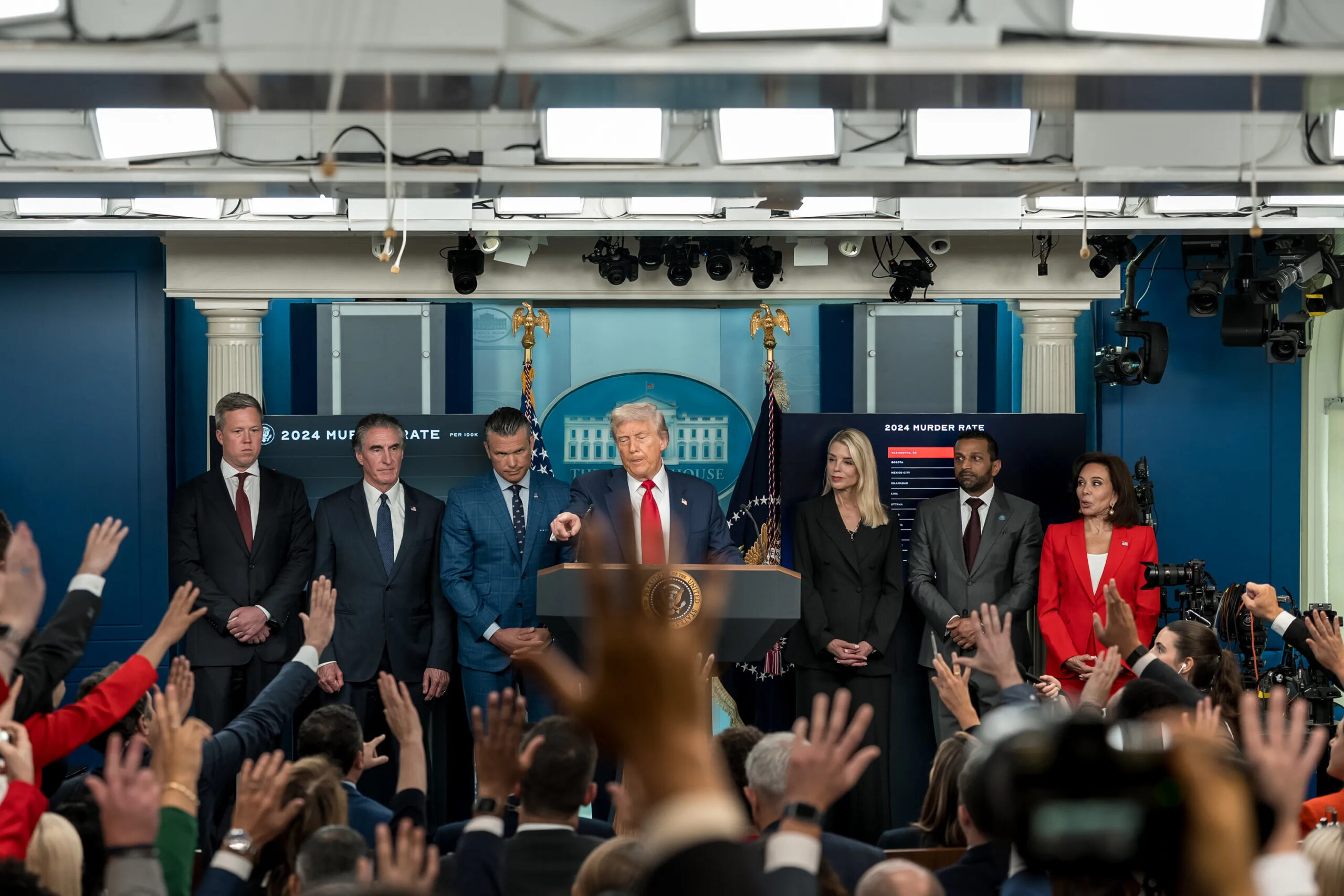
Nine months into his second term, President Trump’s promise to restore freedom of speech is under scrutiny, as his administration’s regulatory threats to media paint a more punitive picture of expression in America.
When Donald Trump returned to the White House in January, among a flurry of day-one orders was a directive to “restore freedom of speech and end federal censorship,” framed as a cornerstone of his second term. Nine months later, that vow appears increasingly brittle, tested by a series of decisions by his administration – and a flurry of legal challenges in response – that appear to blur the line between protecting speech and policing it, as seen in the fallout from right-wing activist Charlie Kirk’s assassination in September.
Appearing on FOX News in the days after Kirk’s death, Attorney General Pam Bondi said, “It’s free speech, but you shouldn’t be employed anywhere if you’re going to say that,” referring to “horrible things” said about the media personality. She went on to warn businesses could face legal action for discriminating against conservative viewpoints, citing an Office Depot employee in Michigan who refused to print flyers of Kirk for a memorial vigil.
“It sends a pretty clear message – if you say something we don’t like, we’ll encourage your employer to fire you and possibly charge you with a crime,” said Factal Senior Editor Jimmy Lovaas.
That backlash soon extended to the world of late-night television, where Jimmy Kimmel was taken off the air for several nights following his remarks on the fallout of Kirk’s death on his eponymous show on ABC– a suspension that drew plaudits from the president himself.
“Not every media outlet has billions in revenue and a robust legal department.”
While public pressure on media entities is nothing new, Republican officials exerted an increased level of influence in pushing for the private sector to fall into line.
Federal Communications Commission Chair Brendan Carr told right-wing podcaster Benny Johnson, “we can do this the easy way or the hard way,” suggesting government intervention could be on the table if ABC did not act to suspend the host. Carr cited an existing FCC rule on “news distortion,” applying what would be an unprecedented interpretation.
“That’s a rule that’s always been understood to only apply to news programs, so having it aimed at a comedian hosting a late-night show has raised many concerns,” Lovaas said.
That regulatory pressure on the network loomed large as Nexstar Media Group followed Sinclair Broadcasting’s lead in pulling Kimmel’s show from its stations, in a move likely aimed at staying in the administration’s good graces as it seeks regulatory approval for its planned merger with TEGNA , another media conglomerate.
But, while the aftermath of Kirk’s death may be the most visible signifier in the shift in the U.S. media landscape, it is not the only one.
President Trump has frequently made his opinions known about coverage he finds unfavorable and hasn’t hesitated to take outlets to court over defamation claims.
In September, he filed a $15 billion suit against The New York Times, alleging that articles and a book published by Times journalists in the leadup to the 2024 election were printed with “actual malice” and caused both economic and reputational harm. While the suit was dismissed days later, the spectre of legal action may dissuade smaller outlets from publishing stories that put them in conflict with the administration.
“I’m sure The Times would say they’re undeterred and proceeding as usual, but not every media outlet has billions in revenue and a robust legal department,” Lovaas said.
“For decades, the media has been seen as a medium for change and progress, even during conservative administrations.”
Media access to the administration has also tightened, following a new Pentagon edict instituting restrictions on reporting, prompting dozens of journalists to return their credentials and vacate their offices.
“I only covered a state legislature for a short time, but I can promise you sources would have spoken less freely if, instead of running into them in a hallway, I was escorted to them by some sort of government watcher,” Lovaas said.
“Now amplify that, and instead of it being someone like me asking about a motorcycle helmet law, the reporter is asking about possible extrajudicial killings off the coast of Venezuela. It’s no wonder that basically all the major news organizations condemned the idea and said they won’t sign the new rules.”
In their stead, the Pentagon announced what officials called “the next generation” of press corps in late October, composed predominantly of right-leaning and conservative outlets including OAN and The Federalist.
That may be the strongest indicator yet of the atmosphere surrounding not only the media but the future of free speech in the United States. Ultimately traditional media outlets weren’t barred from the Pentagon. Instead, new restrictions proved so onerous that only those more favorably aligned with the administration found it worthwhile to stay.
This expansion of the “prior restraint” principle won’t prevent reporting entirely, but will shape what information reaches the public.
“For decades, the media has been seen as a medium for change and progress, even during conservative administrations,” Lovaas said.
“But that train starts to go off the rails when the political climate turns reactionary. What was once seen as progress is now being cast — at least by some — as harmful. Add to that, conservatives looking to expand their media footprint at a time of further media consolidation and you get a bit of a perfect storm for climate change, at least of the political and media variety.”
Written by Joe Veyera. Edited by Halima Mansoor and Bada Kim.
Further reading:
- Review Factal’s coverage of the media on our topic page (members links)
- Listen to “The President’s Path” podcast by the BBC on how the Trump administration responds to critics and spins narratives
- Read this report from the Committee to Protect Journalists on Trump’s first 100 days in office, which claims his measures, “threaten the availability of independent, fact-based news for vast swaths of America’s population”
- Dive into war correspondent Nancy Youssef’s piece in The Atlantic on how she’ll continue reporting despite changes at the Pentagon.
Top photo: President Donald Trump takes questions from the media during a press conference on Aug. 11, 2025. (White House/Abe McNatt)
Thanks for reading! If you enjoyed this edition, sign up here to receive The Debrief in your inbox on the first of every month.
Factal gives companies the facts they need in real time to protect people, avoid disruptions and drive automation when the unexpected happens.
Try Factal for free or talk with our sales team (sales@factal.com) for a demo.