
 Factal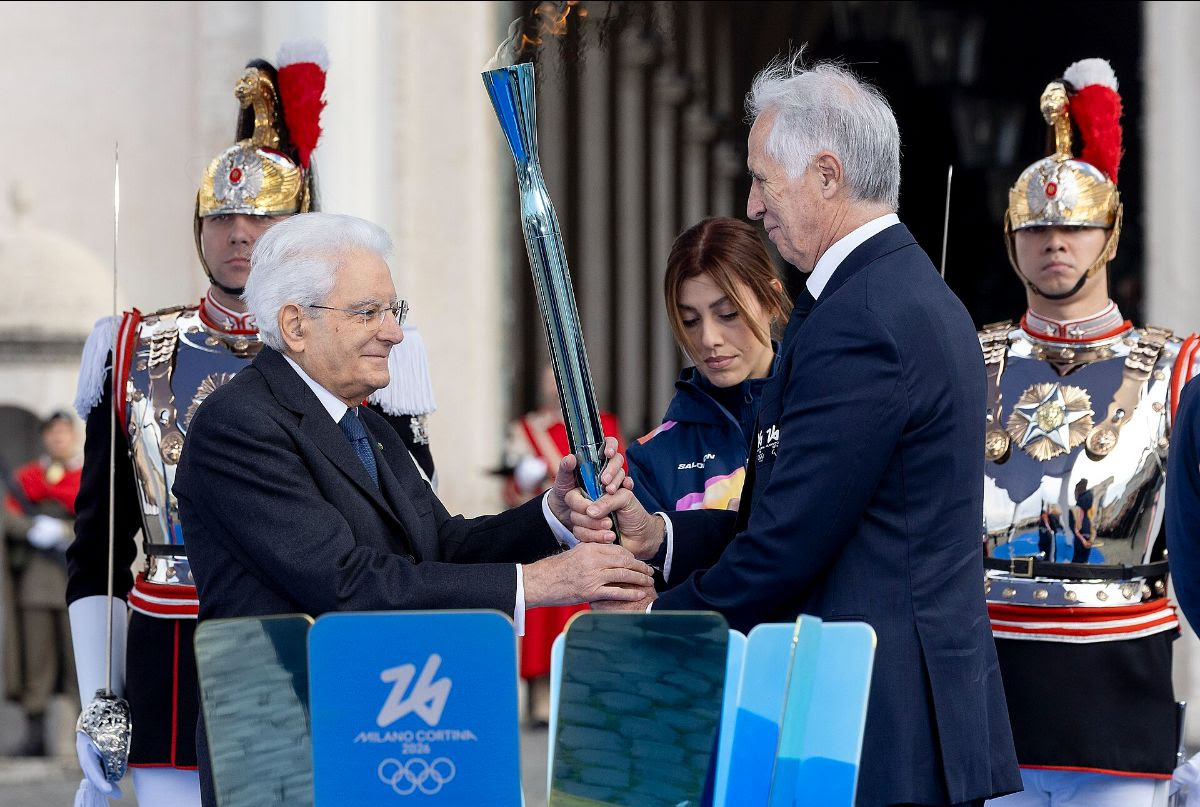
Welcome to Factal Forecast, a look at the week’s biggest stories from the editors at Factal.
We publish our forward-looking note each Thursday to help you get a jump-start on the week ahead.
U.S. Border Patrol agents fatally shot a man last week in Minneapolis during a campaign the Department of Homeland Security has called “the largest immigration enforcement operation ever carried out.” In this week’s Factal Forecast podcast, Senior Editor Jimmy Lovaas and Editor Joe Veryera discuss reactions to the second fatal shooting by federal forces in the city and what the fallout may mean for the government’s immigration crackdown.
Listen now or download on your favorite platform.
Week of Jan. 30-Feb. 6
A Look Ahead
Jan. 30 | South Korea and Japan defense ministers meet
Defense ministers from South Korea and Japan will meet Friday to discuss a range of issues, including further cooperation and regional security.
What’s happened so far
The meeting, to be held at a naval base in Japanese Defense Minister Shinjiro Koizumi’s hometown of Yokosuka, is expected to focus on greater defense cooperation between the two nations as well as the threat from North Korea. A recent meeting between Japan’s new prime minister and South Korea’s president saw an easing of traditional tensions as they played the drums together. Japan is seeking enhanced cooperation with South Korea as it navigates a diplomatic spat with China that has worsened over recent months, exacerbated partly by what China calls increased Japanese militarism.
The impact
The bilateral meeting comes after South Korean Defense Minister Ahn Gyu-back met with a senior U.S. defense official to discuss continued cooperation amid reports of increased tariffs. South Korea earned praise from U.S. Defense Secretary Pete Hegseth in November for Seoul’s plan to increase defense spending to 3.5 percent of GDP. Japan also increased its spending to a record level in December’s defense budget request. This is likely the last meeting of its kind before Japan’s general election scheduled for late February which could see a new defense minister.
Feb. 1 | Trump administration to cut funding for sanctuary cities
The Trump administration’s Office of Management and Budget (OMB) is exploring methods to cut federal funding as soon as Sunday for 14 Democratic states and territories who do not cooperate with immigration enforcement operations.
What’s happened so far
Debates over federal funding for sanctuary cities took place during the Bush years and President Donald Trump’s first term, but have returned amid the ICE operations in Minneapolis. At last week’s Detroit Economic Club, Trump claimed his government would not be “making any payment to anybody that supports sanctuary cities.” In practice, this means the OMB has ordered all government departments, save for Defense and Veterans Affairs, to submit documentation of every “grant, loan, contract, subcontract and ‘other monetary awards’” to sanctuary states. Earlier this year, The Department of Health and Human Services paused funding for childcare in blue states in response to controversy over fraud at Somali-owned daycare centers.
The impact
The OMB’s cuts could amount to an unprecedented hundreds of billions of dollars in federal funding. The decision will surely be challenged in the courts, and a federal judge recently overturned an OMB decision to cancel $8 billion in clean energy funding for blue states. As federal agent killings in Minneapolis have captured the nation’s attention, Democrats are attempting to wield their own monetary power by threatening to derail a $1.3 trillion federal appropriation until more legal constraints are put on immigration agents. Beyond fights over federal funding, Trump’s administration appears to be pulling back from their aggressive operations in Minnesota’s Twin Cities, with senior Homeland Security officials reportedly on the hot seat.
Feb. 1 | Costa Rica general election
Costa Rican voters on Sunday will elect the country’s president, two vice presidents and 57 members of the legislative assembly.
What’s happened so far
General elections are held in Costa Rica every four years, overseen by the Supreme Electoral Tribunal. This year, 20 candidates are vying for the presidency. The winning candidate must reach at least 40 percent of the vote or a runoff election will be held on April 15. Laura Fernandez, former chief of staff of current President Rodrigo Chaves, has emerged as the current frontrunner. Chaves cannot run for election in 2026 as consecutive presidential terms contravene Costa Rica’s constitution.
The impact
In 2022, a mere 4 percent of Costa Ricans regarded security issues as a top concern. This year, approximately 40 percent of the population regard security as a key issue. Organized crime and drug trafficking have fueled these concerns, with the country recording the eighth highest homicide rate in Latin America in 2024. According to polling, a large proportion of the country’s voting population, between 43 and 45 percent, remain undecided, possibly indicating a highly contested race. Voter turnout is another key issue — electoral authorities are encouraging participation this year after at least 40 percent of the population abstained from voting in 2022.
Feb. 1 | Saudi Arabia opens stock market to foreign investors
Beginning Sunday, Saudi Arabia’s Capital Market Authority will officially open their stock trading to all foreign investors.
What's happened so far
Qualified Foreign Investor restrictions will be abolished, giving non-institutional investors a crack at buying and holding Saudi shares, hopefully inspiring larger inflows and market liquidity. The bigger news, however, may be the Kingdom hinting at easing the 49 percent foreign ownership cap on Saudi firms, allowing foreigners to hold majority shares in traded companies. Another restriction, the 10 percent limit per single investor, remains in place. After Saudi’s equity market underperformed relative to its emerging market peers in 2025, news announcing removal of eligibility restrictions on foreign investors saw stocks rally 3 percent in the next trading session on Jan. 7.
The impact
An increase in foreign-owned shares could unlock even more demand for the Kingdom’s markets, moving them closer to their Vision 2030 goals of relying less on hydrocarbons and buoying their economy with tourism, trade and investment. In all, the move signals a commitment toward further integration with global markets and a liberalization of their financial rules as a whole.
Feb. 3 | Colombian president visits White House
Colombian President Gustavo Petro and U.S. President Donald Trump are set to meet on Tuesday at the White House.
What's happened so far
Trump announced the meeting on social media earlier this month, days after he threatened military action against Colombia following the U.S. capture of Venezuelan President Nicolas Maduro in Caracas. Petro on Friday said conversations with the United States “are going well” amid preparations for the in-person meeting, marking a significant departure from earlier this year, when the U.S. State Department threatened to revoke Petro’s visa following his criticism of U.S. foreign policy during a rally in New York.
The impact
Officials in Colombia and the United States have framed the upcoming meeting as a shift from recent tensions toward a focus on “common priorities.” In a statement last week, a State Department spokesperson said Trump and Petro will address issues of “mutual importance,” highlighting shared priorities including “commercial ties, regional security cooperation, and counternarcotics efforts.” Petro, who has said the United States should return Maduro to Venezuela to face trial there, called the planned meeting in Washington a “key, fundamental and decisive” one.
Feb. 4 | New START Treaty expiration
The New Strategic Arms Reduction Treaty (START) between Russia and the United States is set to expire Wednesday, marking a break in over five decades of bilateral nuclear arms control.
What's happened so far
The treaty, signed by President Barack Obama and President Dmitry Medvedev in 2010 and extended for five years in 2021, built on earlier agreements that sought to achieve reductions in Cold War arsenals. It stipulated a specific amount of deployed and non-deployed armaments, including nuclear warheads, that each country is allowed to have. Although both countries pulled out of the agreement in 2023, both Russia and the United States hinted that they are continuing to stick to the treaty’s core numerical limits with no recorded instances of large-scale breaches.
The impact
The expiration comes at a time of intense strategic competition between the two countries. Analysts believe the expiration will raise the risk of unpredictability in their relationship and could lead to possible misunderstandings that set the stage for an uncontrolled arms race. In public remarks made in September 2025, Russian President Vladimir Putin suggested the United States and Russia mutually observe the New START limits for one year after the expiration and, while President Donald Trump initially stated it sounded “like a good idea,” he later hinted in a New York Times interview that he will let the treaty expire to make room for a “better agreement.”
Feb. 6 | Winter Olympics begin in Milan
The 2026 Winter Olympic Games will begin Friday in Italy.
What's happened so far
Italy will host the Winter Olympics this year at sites spanning across the north of the country with Milan and Cortina d’Ampezzo serving as the main host cities. The games will be the most spread-out in the history of the winter games, with other cities like Verona also playing host. Climate change has posed a unique challenge already for the Milan games, with organizers at Italy’s Alpine host venues having to increasingly resort to artificial snow for mountain sports despite the energy-intensiveness of the practice and the risks posed by the icier and faster artificial snow.
The impact
Potentially coming into play will be a host of security concerns such as the risk posed by drones or sabotage to critical infrastructure as seen in French rail in the run-up to the 2024 Paris Summer Olympics. Cybersecurity concerns exist as well, with industry experts warning of the risk of incidents spanning from DDoS attacks to nation state-linked espionage attempts. Lastly, the risk of protest remains ever-present, with locals pushing back against overtourism as well as environmental sustainability concerns. Other potential protest catalysts include Palestine, which has acted as the flashpoint for unrest in Milan in recent months, as well as the role of U.S. ICE agents in event security.
What Else Matters

Minneapolis shooting
The fatal shooting of a 37-year-old ICU nurse by U.S. Border Patrol agents in south Minneapolis on Saturday morning — the second involving federal agents in the city in the past month — has drawn widespread condemnation and renewed calls for immigration enforcement to change their approach or withdraw from the city entirely. On Monday, President Donald Trump announced he was sending "border czar" Tom Homan to Minnesota and later said he had productive calls with Gov. Tim Walz and Minneapolis Mayor Jacob Frey. Still, tensions remain high in the city, with an estimated 3,000 federal officers participating in the immigration enforcement operations.
Watch for: A federal judge has yet to rule on a suit brought by the state of Minnesota and the cities of Minneapolis and St. Paul claiming the deployment of immigration agents is a violation of the 10th amendment. Border Patrol "commander at large" Gregory Bovino has reportedly been ousted from his role and, as of Wednesday, at least two Republican Senators — Thom Tillis of North Carolina and Lisa Murkowski of Alaska — were quoted as saying Homeland Security Secretary Kristi Noem should step down, suggesting there may be more fallout to come. Meanwhile, daily protests have continued outside the Whipple Federal Building in Minneapolis.
Forecast Podcast
Editors Jimmy Lovaas and Joe Veyera discuss the shooting and protests in Minneapolis, plus more on South Korea and Japan’s defense ministers meeting, an election in Costa Rica, Colombia’s president visiting the White House, and the Winter Olympics in Italy.
This episode includes work from Factal editors Joe Veyera, David Wyllie, Michael Archer, Theresa Seiger, and Alex Moore. Produced and edited by Jimmy Lovaas. Music courtesy of Andrew Gospe.
Trump’s Gaza Board of Peace
U.S. President Donald Trump’s so-called Gaza Board of Peace met officially for the first time at the Davos Economic Forum in Switzerland last week amid criticism the group excludes the Palestinian Authority and is outside the framework of the United Nations. Traditional U.S. allies such as France, Spain and the United Kingdom have declined invitations, while the likes of Bahrain, Saudi Arabia and Belarus have joined. Russia has also been sent an invitation, and the Kremlin says the proposal is being assessed. Trump presides over the organization as chairman with an executive board below him, including his son-in-law Jared Kushner and former U.K. Prime Minister Tony Blair. The idea of setting up the Board of Peace for Gaza was established in Trump’s 20-point peace plan in September 2025 and was mandated by the U.N. to sustain the ceasefire and oversee the post-war management of Gaza.
Watch for: Despite the board being created to deal primarily with the peace process in Gaza, the nascent organization’s charter and statements by Trump suggest a far broader purview, fueling speculation the group will undermine the work of the U.N. Trump sought to allay these fears at the Davos Forum, stating the board would work “in conjunction with the United Nations.” As it stands, the group’s immediate mission is to preside over the brittle ceasefire in Gaza and the implementation of the peace plan. In an apparent step forward, Israel agreed to the partial reopening of the Rafah crossing this week after an operation to return the remains of the last hostage.
A practical guide to identifying AI videos for risk intelligence teams

Join other risk and security professionals next week to learn how to spot AI-generated and modified videos.
These are two identical workshops, so register for a time below.
- Feb. 3rd at 11 a.m. ET / 8 a.m. PT
- Feb. 4th at 3 p.m. ET / 12 p.m. PT
Extended Outlook
What's on our radar in the coming weeks...
Jan. 30-Feb. 6
Jan. 30
- U.S. government funding deadline
- South Korea and Japan defense ministers meet
Feb. 1
- Start of conscription for Jordan military service
- Costa Rican general election
- Trump administration plans to cut funding from sanctuary cities
- Saudi Arabia opens stocks to foreign investors
- 68th Grammy Awards
Feb. 3
- Colombian president visits White House
Feb. 4
- New START Treaty expiration
Feb. 6
- Winter Olympics begin in Milan
- Three-day Basant festival in Lahore
- Potential launch date of NASA's Artemis II
Feb. 7-13
Feb. 7
- Haiti's Presidential Transitional Council mandate ends
- Israeli President Isaac Herzog visits Sydney
Feb. 8
- Super Bowl
- Thailand snap election
- Japan general election
Feb. 9
- U.S. House Oversight to depose Ghislaine Maxwell
- Court hearing for Bangladesh's ousted PM Hasina on sedition case
- UK's Prince William visits Saudi Arabia
Feb. 10
- General strike in Argentina
- ICE, Border Patrol leaders to testify in House, Senate
Feb. 11
- Joint Chiefs chairman to convene meeting of Western Hemisphere military leaders
Feb. 12
- Bangladesh parliamentary election and July Charter referendum
Feb. 14-20
Feb. 16
- Presidents' Day in U.S.
Feb. 17
- Lunar New Year
Feb. 18
- Ash Wednesday
- First night of Ramadan
Feb. 19
- Former South Korean President Yoon to be sentenced over 2024 insurrection
Feb. 21-27
Feb. 22
- Laos National Assembly election
Feb. 23
- ICC confirmation of charges hearing for former Philippine President Duterte
Feb. 24
- Fourth anniversary of Russia’s invasion into Ukraine
- Trump delivers U.S. State of the Union
Thanks for reading! If this was forwarded to you, you can sign up for free.
Top Photo: Italian President Sergio Mattarella receives the Olympic torch from IOC member Giovanni Malagò for the lighting of the cauldron of the Milan-Cortina 2026 Winter Olympic Games. (Photo: Quirinale)
Factal gives companies the facts they need in real time to protect people, avoid disruptions and drive automation when the unexpected happens.
Try Factal for free or talk with our sales team (sales@factal.com) for a demo.